
Wrist Sprain

Wrist Sprain Treatment in Haldwani

Wrist Sprain Treatment in Haldwani at Healthcapes helps patients recover from stretched or torn ligaments in the wrist, the bands of tissue that connect bones at the joint. It typically happens during a fall, when the wrist suddenly twists or bends, damaging the ligaments in the process. Most wrist sprains respond well to home care, physiotherapy, and guided exercises, though more serious sprains may need a splint or, in rare cases, surgery.

What Causes a Wrist Sprain

What causes a wrist sprain - Healthcapes Haldwani

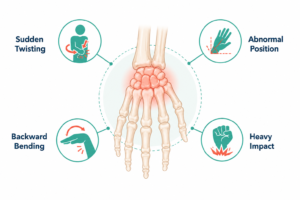
A wrist sprain is usually the result of physical trauma, most commonly from falling onto an outstretched hand, an injury often referred to as FOOSH (fall onto an outstretched hand). Your wrist can sprain if it:

  • Suddenly twists
  • Moves into an abnormal position
  • Bends backward
  • Sustains a heavy impact

This often happens during sports involving frequent falls, such as basketball, gymnastics, mountain biking, and skateboarding. It can also result from overuse in sports like tennis and boxing. Wrist sprains aren’t limited to athletes either; everyday accidents like slipping on ice or tripping over something can cause the same injury.

Symptoms of a Wrist Sprain

A sprained wrist is typically quite painful, especially with movement. Other symptoms may include:

  • Tenderness
  • Warmth around the joint
  • Popping or tearing sounds at the time of injury
  • Difficulty moving the wrist
  • A feeling of weakness

Mild sprains may cause slight swelling, while more serious sprains can involve significant swelling and bruising.

How We Diagnose Wrist Sprains at Healthcapes

Diagnosis typically starts with a physical examination checking for swelling, tenderness, bruising, and mobility. We may recommend an X-ray to confirm the wrist isn’t fractured, or an MRI or CT scan to get a clearer picture of the ligaments and tendons and assess the severity of the injury.

Wrist Sprain Treatment in Haldwani at Healthcapes

Once we understand the severity of your wrist sprain, we build a treatment plan around it. This typically includes physiotherapy to restore strength, stability, and range of motion, along with therapies like Deep Tissue Laser Therapy to reduce swelling and support ligament healing. For more significant sprains, we work alongside your doctor if splinting or further medical intervention is needed, while focusing on getting your wrist strong and stable again once healing allows.

Frequently Asked Questions

Mild sprains often improve within one to two weeks, while more severe sprains can take several weeks to a few months of guided rehabilitation.

No, milder sprains often respond well to rest, physiotherapy, and home care. Splinting is generally reserved for more significant sprains to support healing.

The symptoms can look quite similar, which is exactly why an X-ray is often used to confirm whether the bone is involved or if it’s purely a ligament injury.

Wrist guards during high-risk sports, proper technique, and strengthening the muscles supporting the wrist can help reduce your risk, especially if you’ve been sprained before.

Scroll to Top