
Transverse myelitis
Transverse Myelitis Rehabilitation in Haldwani
Transverse Myelitis Rehabilitation in Haldwani at Healthcapes supports patients recovering after this rare neurological condition has been medically diagnosed and treated. It occurs when both sides of a section of the spinal cord become inflamed, damaging myelin, the protective covering around nerves. This disruption can block nerve signals and lead to physical symptoms that vary depending on which part of the spinal cord is affected. It’s most commonly seen in children aged 10 to 19 and adults aged 30 to 39, though it can occur at any age.
What Causes Transverse Myelitis
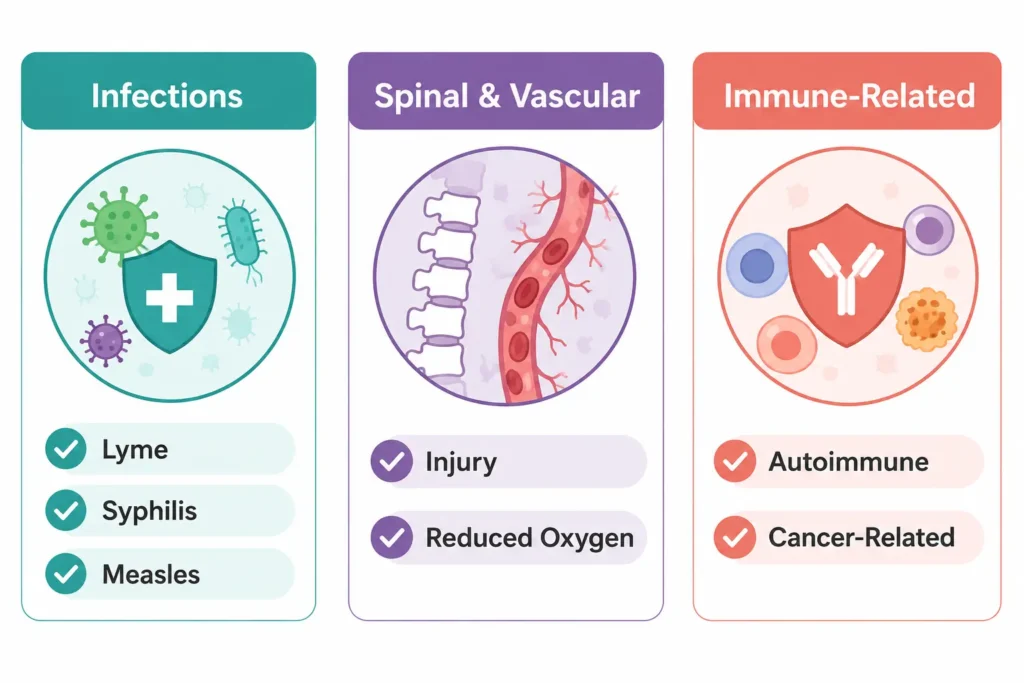
The exact cause often isn’t clear, but the inflammation behind transverse myelitis can develop as a side effect of several other conditions, including:
- Lyme disease
- Syphilis
- Measles
- Viral or bacterial infections
It can also result from spinal injuries, spinal defects, or vascular conditions like atherosclerosis, all of which can reduce oxygen supply to spinal cord tissue, leading to nerve cell damage and inflammation. In rare cases, it can be an early warning sign of multiple sclerosis, and it’s sometimes linked to autoimmune conditions like lupus, or triggered by an immune response related to certain cancers. When no underlying cause can be identified after thorough testing, it’s referred to as idiopathic transverse myelitis.
Symptoms of Transverse Myelitis
Symptoms can develop over several hours or days, or more gradually over one to two weeks, and may include:
- Back or neck pain
- Weakness in the arms or legs
- Abnormal sensations in the legs, such as burning, tingling, or pricking
- Loss of bladder or bowel control
- Heightened sensitivity to touch
Where these symptoms show up depends on which part of the spinal cord is affected. Inflammation in the neck typically causes symptoms from the neck down, while inflammation in the mid-spine tends to affect the body from the waist down.
How Transverse Myelitis Is Diagnosed
Diagnosis usually begins with a review of your medical history and a complete physical exam. Since transverse myelitis can result from a number of treatable underlying conditions, your provider may test for several of these, often starting with a CT or MRI scan. Myelography, a procedure using an injected dye and real-time X-ray imaging, may also be used to get a clearer picture of the spinal cord. Blood tests and a spinal tap can help rule out other potential causes.
Transverse Myelitis Rehabilitation in Haldwani at Healthcapes
Once your underlying condition has been diagnosed and medically treated, physiotherapy plays an important role in rebuilding strength, mobility, and function. At Healthcapes, we build a rehabilitation program tailored to your specific symptoms and level of recovery, working within the guidance of your treating medical team to support your progress toward greater independence.
Frequently Asked Questions
Treatment focuses on managing the underlying cause and supporting recovery. Some patients recover significantly, while others experience lasting effects, varying by individual case.
Transverse myelitis affects the spinal cord itself, while GBS affects the peripheral nerves outside the brain and spinal cord. Both can cause weakness, but they involve different parts of the nervous system.
Yes, once the underlying condition has been medically managed, physiotherapy can support rebuilding strength, mobility, and function during recovery.
If symptoms are developing quickly, especially with loss of bladder or bowel control, seek prompt medical evaluation rather than waiting.