
Headache Treatment
Headache Treatment in Haldwani
Headache Treatment in Haldwani at Healthcapes supports patients dealing with pain that shows up in the head, upper neck, or face, one of the most common complaints people bring to any clinic. Headaches aren’t a single condition; there are several distinct types, each with its own pattern and triggers. Migraines and tension headaches are the most common, but sinus, cluster, cervicogenic, and other types are common too, and knowing which one you’re dealing with makes a real difference in how it’s managed.
Types of Headaches
Tension headaches are often brought on by stress, typically starting midday, and can range from mild to severe, sometimes worsening over time.
Sinus headaches happen when your sinuses, small air-filled spaces behind your nose, cheekbones, and forehead, become irritated by infection or allergies, leading to swelling, excess mucus, and pressure.
Rebound headaches, also called medication-overuse headaches, tend to occur most mornings and are linked to frequent use of certain pain medications.
Icepick headaches cause sudden, brief stabbing pain around the eyes and temples, occurring without warning, and are more common in people who also experience migraines.
Cluster headaches are rare but severe, occurring in patterns called cluster periods, sometimes at the same time daily for weeks. Pain is usually on one side and can cause eyelid drooping or nasal congestion.
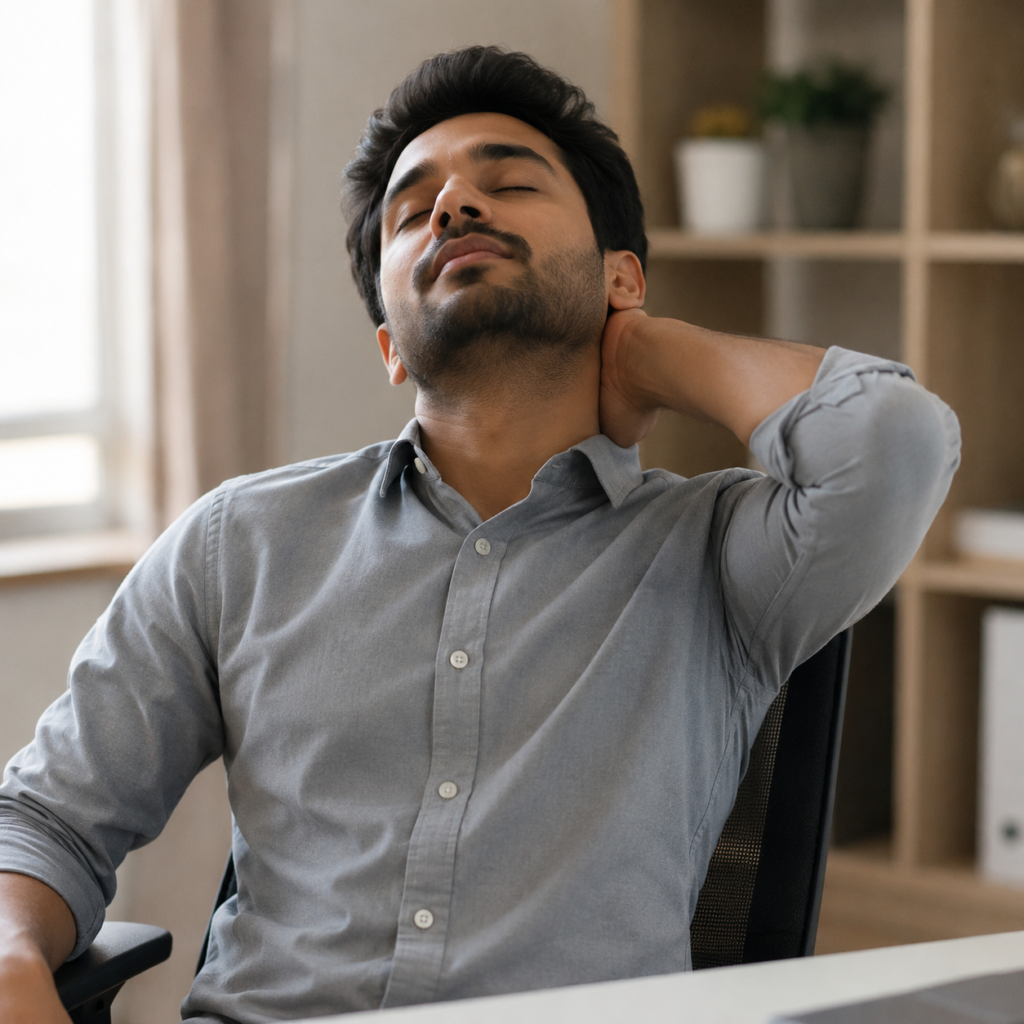
Cervicogenic headaches stem from an issue in the neck rather than the brain itself, often triggered by sudden neck movement or prolonged poor positioning, with pain that can last hours to days.
What Causes Headaches

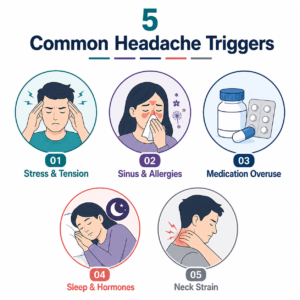
The exact cause varies by type. Tension headaches are commonly linked to stress, poor sleep, sinus or allergy issues, jaw clenching, poor posture, hormonal changes, and certain foods or medications. Cluster headaches appear connected to changes in sleep patterns, alcohol, smoking, and hypothalamus function, the part of the brain regulating your body’s internal clock. Rebound headaches result from overusing certain medications, including common pain relievers, and cervicogenic headaches typically stem from neck strain, injury, or prolonged poor posture.
Symptoms by Headache Type
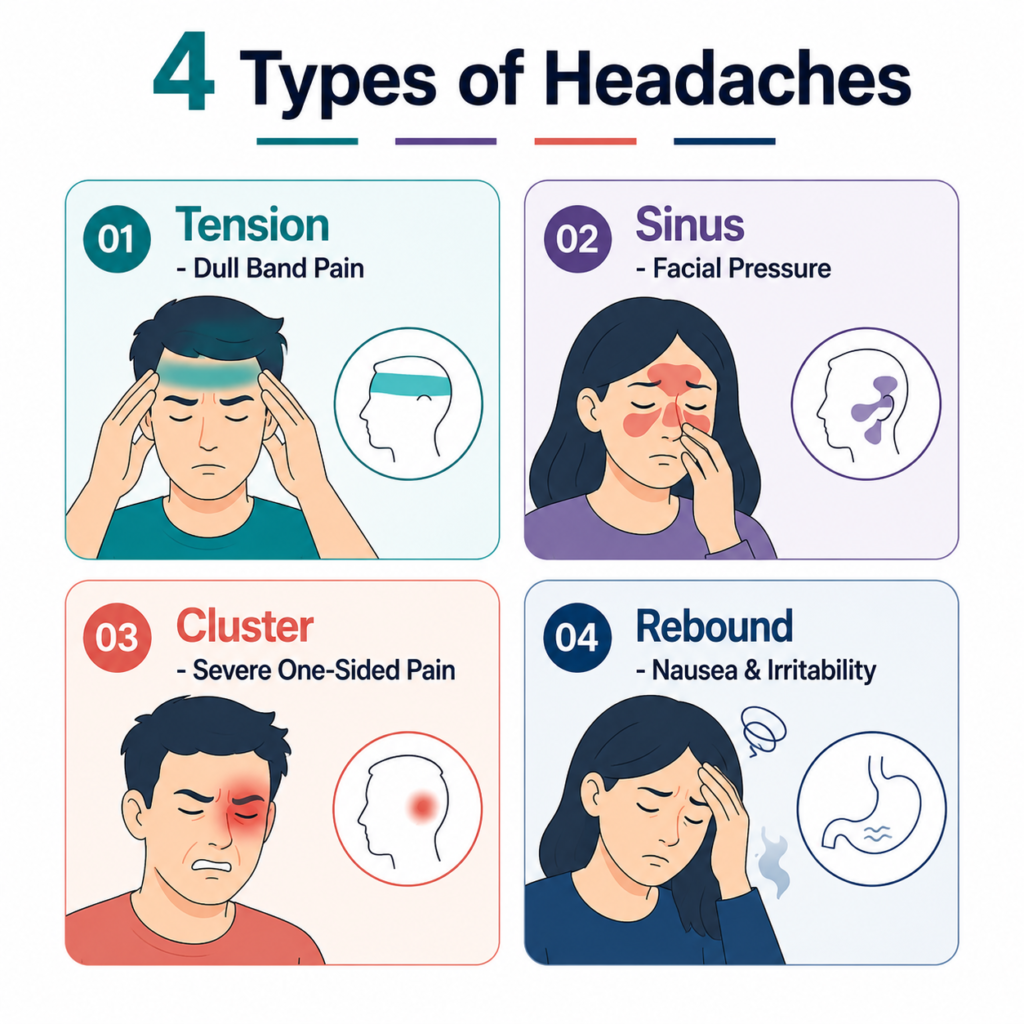
Tension headaches cause constant, dull pain, often felt as a band-like tightness around or on both sides of the head, sometimes with jaw or neck aching.
Sinus headaches cause pressure-like pain around the forehead, eyes, nose, or cheeks, often worsened by sudden movement, along with a runny nose or facial swelling.
Cluster headaches cause severe pain around one or both eyes, often with redness, swelling, and restlessness.
Rebound headaches commonly bring nausea, irritability, low mood, or sleep difficulties alongside the head pain.
How We Diagnose Headaches at Healchcapes
Most headache types can be identified through a detailed discussion of your symptoms, pain pattern, and physical examination. Keeping track of when your headaches occur, how they feel, and what seems to trigger them genuinely helps pinpoint the cause and shape the right treatment approach. In rare cases, blood tests or imaging like an X-ray, CT, or MRI scan may be recommended to rule out other causes.
Headache Treatment in Haldwani at Healthcapes
For tension and cervicogenic headaches in particular, physical factors like neck tightness, posture, and muscle tension often play a direct role, and this is where Healthcapes can help most effectively. Our approach typically includes physiotherapy and Manipulation & Mobilization to ease neck and shoulder tension, along with Deep Tissue Laser Therapy or PEMF Therapy to support relaxation and reduce recurring triggers. For headache types more closely tied to underlying medical or neurological factors, such as cluster or rebound headaches, we work alongside your doctor’s medical management rather than in place of it.
Frequently Asked Questions
Yes, particularly for tension and cervicogenic headaches where neck and posture-related tension is a contributing factor. Other headache types may need medical management alongside supportive treatment.
Migraines are a specific type of headache with distinct features like throbbing pain, nausea, and sometimes visual aura, while “headache” is a broader term covering several different types and causes.
They indicate an overuse of certain medications and are worth discussing with your doctor, since continuing the same pattern can keep the cycle going.
If headaches are frequent, severe, unusual for you, or accompanied by other symptoms, it’s worth getting a proper evaluation to identify the type and appropriate treatment.