
Sprains and Strains Treatment
Sprains and Strains Treatment in Haldwani
Sprains and Strains Treatment in Haldwani at Healthcapes covers two of the most common soft tissue injuries out there, ones that get used interchangeably far more often than they should. Both involve damage to soft tissue, but they’re not quite the same thing.
A sprain is an injury to a ligament, the tough band of tissue connecting bone to bone, most commonly affecting the wrists, ankles, thumbs, and knees.
A strain is an injury to a muscle or tendon, the tissue connecting muscle to bone, most commonly affecting the legs, knees, feet, and back.
Knowing which one you’re dealing with genuinely matters, since the recovery approach for each is a little different.
Causes of Sprains
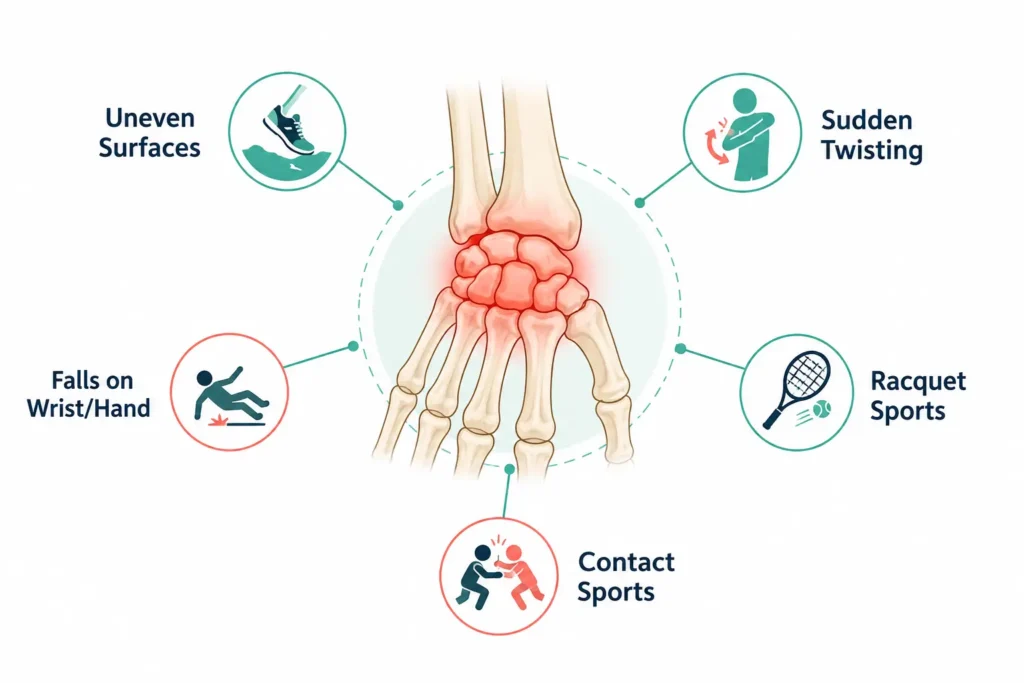
Sprains typically result from a fall, a sudden twist, or trauma that forces a joint beyond its normal range of motion. Common situations include:
- Walking or running on an uneven surface
- Twisting or pivoting suddenly
- Falling and landing on the wrist or hand
- Playing racquet sports
- Contact sports injuries
Causes of Strains
Strains can happen suddenly (acute) or build up gradually over time (chronic).
Acute strains are commonly caused by:
- Lifting a heavy object
- Running, jumping, or throwing
- Slipping or falling
Chronic strains typically develop from repetitive movement in sports like rowing, tennis, or running, or from sitting and standing in an awkward position for prolonged periods.
Symptoms
Sprain symptoms usually appear suddenly around a joint and may include:
- Pain
- Swelling
- Bruising
- Limited joint movement
- Inability to bear weight or use the joint normally
- A “popping” sensation at the time of injury
Strain symptoms can appear suddenly or develop over time, and may include:
- Pain or tenderness
- Swelling
- Bruising
- Muscle spasms or cramping
- Muscle weakness
- Limited movement in the area
How We Diagnose Sprains and Strains at Healthcapes
Diagnosis starts with a discussion of how the injury happened and a physical examination checking swelling, tenderness, and range of motion. Depending on severity, we may recommend imaging like an X-ray or MRI to confirm the diagnosis and rule out associated fractures or more significant tissue damage.
Sprains and Strains Treatment in Haldwani at Healthcapes
Once we understand the grade and severity of your ankle sprain, we build a treatment plan around it. This typically includes physiotherapy to restore stability, strength, and range of motion, along with therapies like Deep Tissue Laser Therapy to reduce swelling and support ligament healing. We also focus on balance and proprioception training, since this plays a key role in preventing repeat sprains once you return to normal activity.
Preventing Sprains and Strains
- Strengthen the muscles around your joints through regular conditioning and stability exercises
- Warm up properly before exercise to increase range of movement
- Wear appropriate, supportive footwear
- Stay aware of your surroundings, especially slippery or uneven surfaces
- Take regular breaks and stretch during repetitive or prolonged activity
Frequently Asked Questions
A sprain affects a ligament (connecting bone to bone), while a strain affects a muscle or tendon (connecting muscle to bone). Symptoms can look similar, but the tissue involved is different.
Mild cases can often improve with rest and home care, but persistent pain, significant swelling, or inability to bear weight should be properly assessed.
This varies by severity and which tissue is affected, ranging from a week or two for mild injuries to several months for more severe cases.
Many are, through proper warm-up, appropriate footwear, and strengthening the muscles supporting commonly affected joints.