

Slipped Disc Treatment in Haldwani
Slipped Disc Treatment in Haldwani at Healthcapes addresses one of the more painful spine conditions out there, also known as a herniated or bulging disc. Your spine is made up of 26 bones, called vertebrae, cushioned by soft discs in between that keep everything in place while letting your back bend and move. Over time, these discs can weaken, and sometimes the soft, jelly-like center pushes out through a tear in the disc’s outer layer, pressing on a nearby nerve or the spinal cord and causing anything from mild discomfort to severe pain.
Where Slipped Discs Commonly Occur
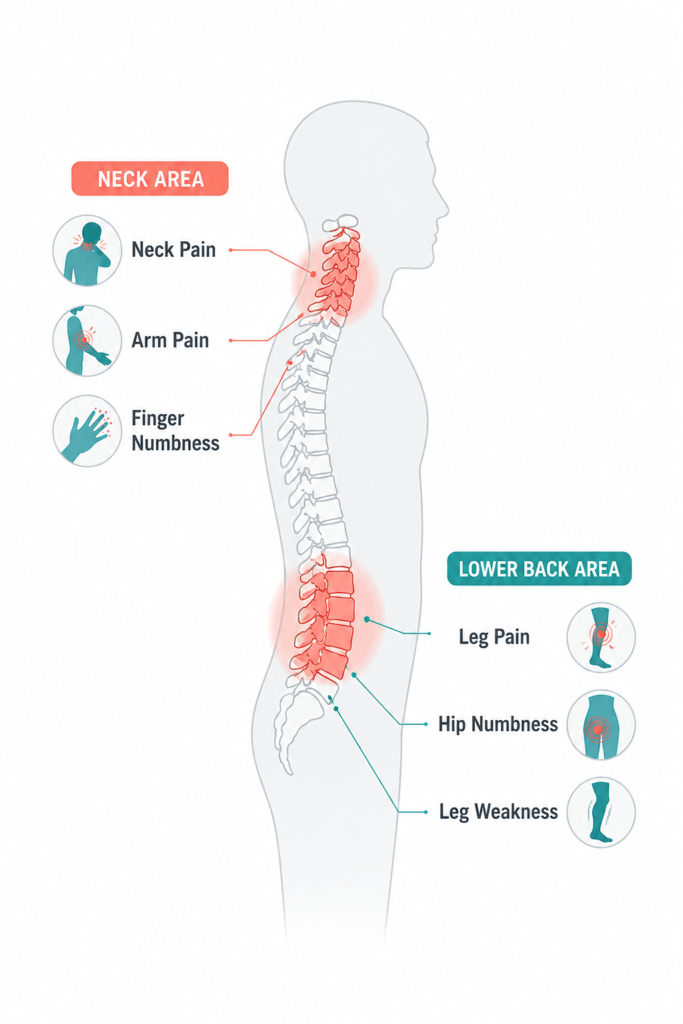
Slipped discs show up most often in the lumbar spine, the lower part of your back between your ribs and hips. They can also occur in the cervical spine, in your neck, though the discs in your upper-to-mid back are rarely involved.
What Causes a Slipped Disc
As you age, spinal discs naturally weaken and flatten out. If a disc becomes weak enough, its outer layer can tear, allowing the inner material to push through and press on nearby nerves. A few factors increase the risk:
- Being middle-aged or older
- Regularly lifting heavy objects
- Being overweight
- Repetitive bending or twisting movements
- Sitting in the same position for long periods
- An inactive lifestyle
- Smoking
Symptoms of a Slipped Disc
Symptoms depend on where the affected disc is located:
In the neck (cervical spine):
- Pain when moving your neck
- Pain near the shoulder blade
- Shooting pain down the arm into the fingers
- Numbness in the shoulder, elbow, forearm, or fingers
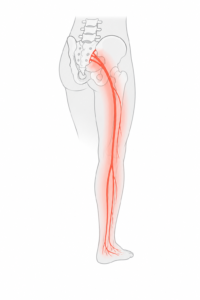
In the lower back (lumbar spine), often felt as sciatica:
- Pain in the leg, hip, or buttocks
- Numbness in these areas
- Pain or numbness in the calf or sole of the foot
- Weakness in one leg
The pain typically worsens with activity and eases with rest. Coughing, sneezing, sitting, driving, and bending forward can all make it worse, since these movements add pressure on the affected nerve.
How We Diagnose a Slipped Disc at Healthcapes
Diagnosis starts with a discussion of your symptoms and a physical examination checking for numbness, weakness, reflex changes, and pain response. We may recommend imaging such as an X-ray, CT scan, or MRI to confirm a bulging or herniated disc, and nerve tests can help determine which nerves are affected and how well they’re functioning.
Slipped Disc Treatment in Haldwani at Healthcapes

Once we understand exactly where the disc is affecting a nerve, we build a treatment plan around that. This often includes physiotherapy to relieve pressure on the nerve and strengthen supporting muscles, along with therapies like Deep Tissue Laser Therapy or Manipulation & Mobilization to ease pain and improve mobility. We also focus on movement and posture adjustments to reduce strain on the affected disc going forward. For many patients, the first goal isn’t just pain relief, it’s understanding which everyday movements are safe and which ones to avoid while the disc heals. Simple things like how you get out of bed, sit at a desk, or lift something off the floor can either support recovery or quietly work against it. That’s why treatment at Healthcapes goes beyond the sessions themselves; we spend time making sure you actually understand your condition, so you’re not second-guessing every movement once you leave the clinic. Recovery timelines vary quite a bit from patient to patient, depending on how much of the disc is affecting the nerve and how long symptoms have been present before treatment starts. Some patients notice meaningful relief within the first few sessions, while others, particularly those with more significant nerve involvement, need a longer, more gradual program. Either way, we track your progress closely and adjust the plan as you improve, rather than sticking rigidly to a fixed routine that may not fit how your body is actually responding.
Frequently Asked Questions
Yes, “slipped disc,” “herniated disc,” and “bulging disc” all refer to the same condition, where the disc’s inner material pushes through its outer layer.
Yes, in most cases. Physiotherapy and targeted non-surgical treatments are effective for the majority of slipped disc cases, with surgery reserved for severe or persistent symptoms.
This varies depending on severity and location, but many patients see meaningful improvement within a few weeks to a couple of months with proper treatment.
Heavy lifting, prolonged sitting, and repetitive bending or twisting can worsen symptoms. Your therapist will guide you on safe movement during recovery.
