
Rotator Cuff Injury Treatment in Haldwani at Healthcapes
Rotator Cuff Injury Treatment in Haldwani
Rotator Cuff Injury Treatment in Haldwani at Healthcapes helps patients dealing with pain in one of the shoulder’s most hardworking structures. Four tendons connect muscles from your shoulder blade and ribs to your upper arm bone, forming what’s known as the rotator cuff, responsible for rotating your arm within its socket. Because these tendons move within a fairly tight space, they can be injured fairly easily, especially when the shoulder is turned or lifted toward the limit of its natural range of movement.
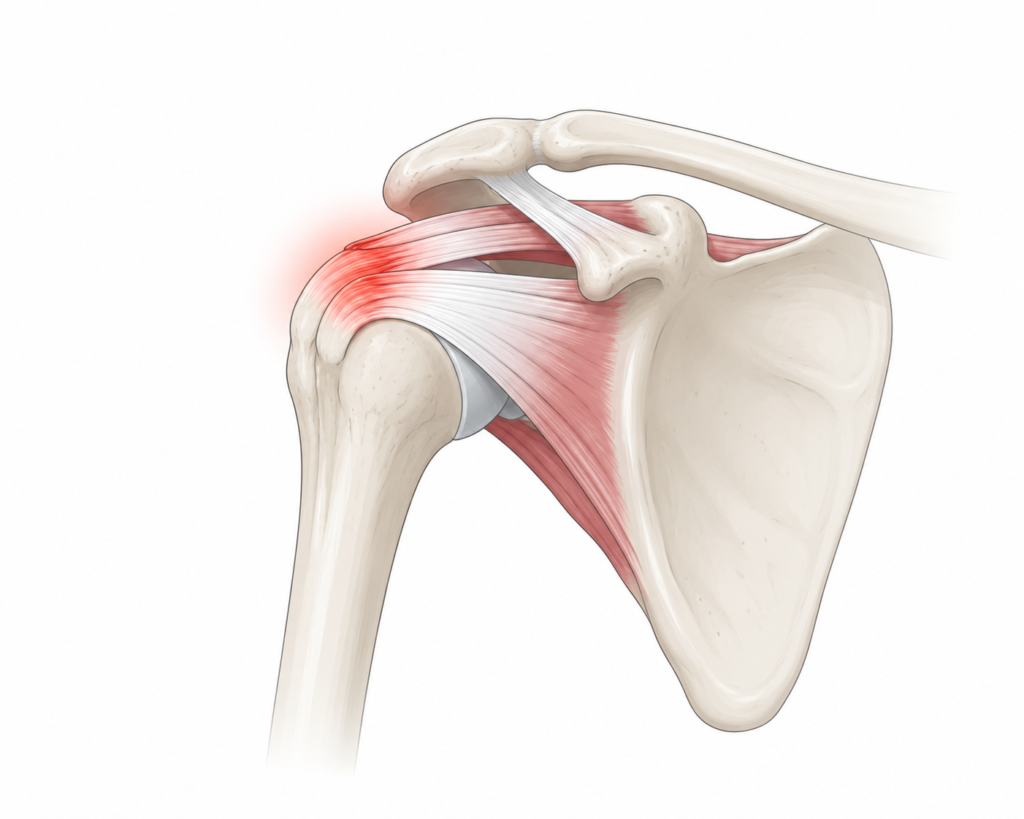
What Causes Rotator Cuff Injuries
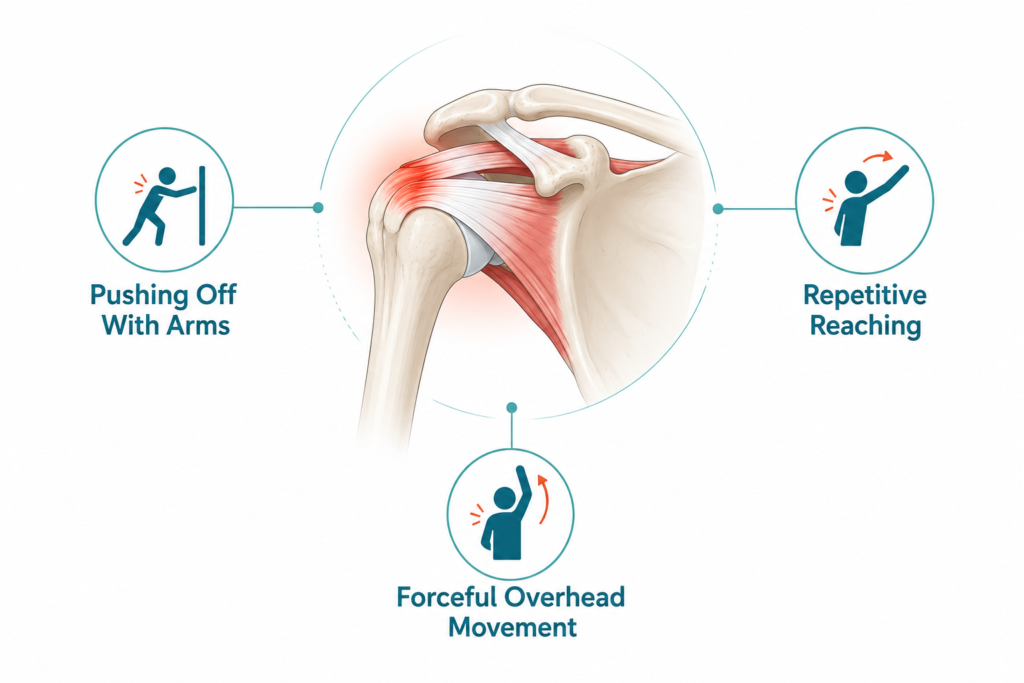
Rotator cuff problems usually develop from either a significant injury to the shoulder or gradual wear and tear on the tendon over time. A few movement patterns are particularly common triggers:
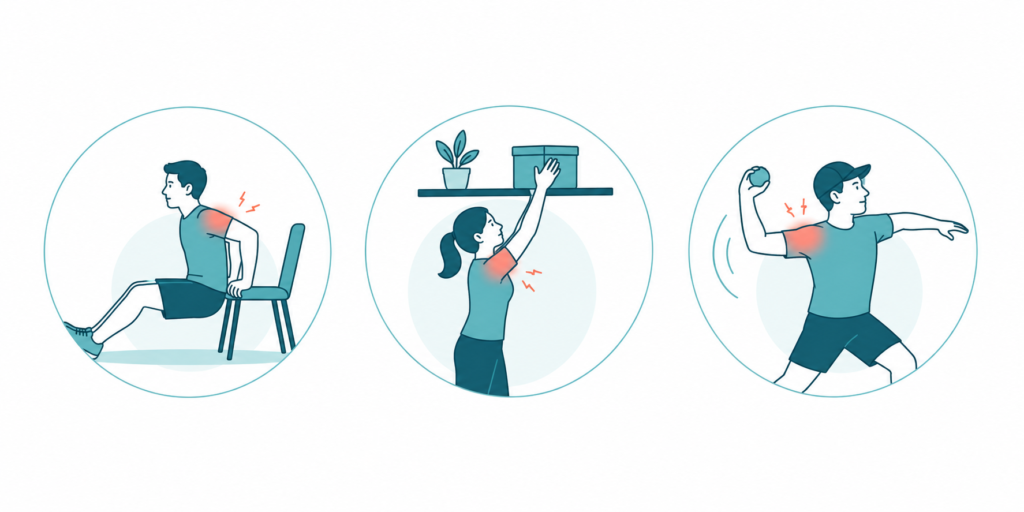
- Pushing off with your arms — often seen in people with knee arthritis or weak thigh muscles, who compensate by pushing off with their arms when standing up from a chair, a motion the shoulder isn’t really built for. Falls onto an outstretched arm or sports collisions can cause similar damage.
- Repetitive reaching — overhead activities like pushups, painting, swimming, or repetitive work like filing or construction narrow the space the rotator cuff tendons pass through, increasing friction over time.
- Forceful or abrupt overhead movements — common in throwing sports, racquet sports, and wrestling, or sudden actions like pulling to start a lawn mower, which can tear an already weakened tendon.
Weak or tight shoulder muscles also narrow this space further, making even routine movements more likely to cause tendon friction.
Types of Rotator Cuff Problems
When the tendons rub or bump against nearby bone or ligament, a condition called impingement syndrome, it leads to inflammation that can show up in a few ways:
- Rotator cuff tendonitis — inflammation of a single tendon, causing pain during specific movements, especially reaching upward
- Shoulder bursitis (subacromial bursitis) — inflammation spreading into the fluid-filled pocket that lubricates the tendons, often worse at night and with almost any shoulder movement
- Rotator cuff tear — a tendon that tears after being weakened by ongoing inflammation
Symptoms of a Rotator Cuff Injury
Pain in the shoulder and upper arm is the main symptom, typically worse when reaching up or out, and especially noticeable during everyday movements like combing your hair or putting an arm into a sleeve. Dull, aching pain at night is also common. If a tear affects a significant portion of the tendon, it can cause noticeable weakness, making it harder to hold your arm out to the side or lift objects, though difficulty using the shoulder doesn’t always mean there’s a tear.
How We Diagnose Rotator Cuff Injuries at Healthcapes
Diagnosis usually starts with a physical examination, checking how your shoulder responds as we rotate and raise your arm through its range of motion. If noticeable weakness is present, further testing may be needed to check for a tear. Depending on the findings, we may recommend an MRI scan for a detailed look at the tendon, or an X-ray if there’s been trauma to the shoulder, limited range of motion, or a need to check for calcium deposits associated with calcific tendonitis.
Rotator Cuff Injury Treatment in Haldwani at Healthcapes
Once we understand the extent and cause of your rotator cuff injury, we build a treatment plan around it. This typically includes physiotherapy to restore strength and mobility, along with therapies like Deep Tissue Laser Therapy or Manipulation & Mobilization to ease inflammation and support healing. We also focus on rebalancing shoulder muscle strength, particularly the often-neglected muscles in the back of the shoulder and around the shoulder blade, to reduce the risk of re-injury.
Preventing Rotator Cuff Injuries
If you’re at risk of a rotator cuff injury, or have had one before, daily shoulder strengthening exercises can meaningfully reduce your risk of future problems. Most people focus on the front of the chest, shoulder, and upper arm during exercise, but strengthening the back of the shoulder and around the shoulder blade is just as important for balanced, healthy shoulder function.
Frequently Asked Questions
Yes, in many cases. Physiotherapy and targeted non-surgical treatment can be effective, particularly for tendonitis and bursitis, and even some partial tears.
Noticeable weakness in lifting or holding your arm out often points to a tear, while pain during specific movements without significant weakness is more typical of tendonitis. A proper assessment can confirm which you’re dealing with.
This depends on the severity and type of injury, but many patients see meaningful improvement within a few weeks of consistent physiotherapy.
Yes, regular shoulder strengthening exercises, especially for the back of the shoulder, can significantly reduce your risk, particularly if you’ve had a previous injury.