
Hamstrings Strains
Hamstrings Strains Treatment in Haldwani
Hamstring Strain Treatment in Haldwani at Healthcapes helps athletes and active individuals recover from one of the most common sports injuries out there. The hamstring muscles, made up of the biceps femoris, semitendinosus, and semimembranosus, are especially prone to tears and strains, particularly in sports demanding speed, power, and agility like soccer, basketball, tennis, and football. Interestingly, the biceps femoris accounts for over 75% of hamstring strain injuries among the three muscles.
What Causes Hamstring Strains
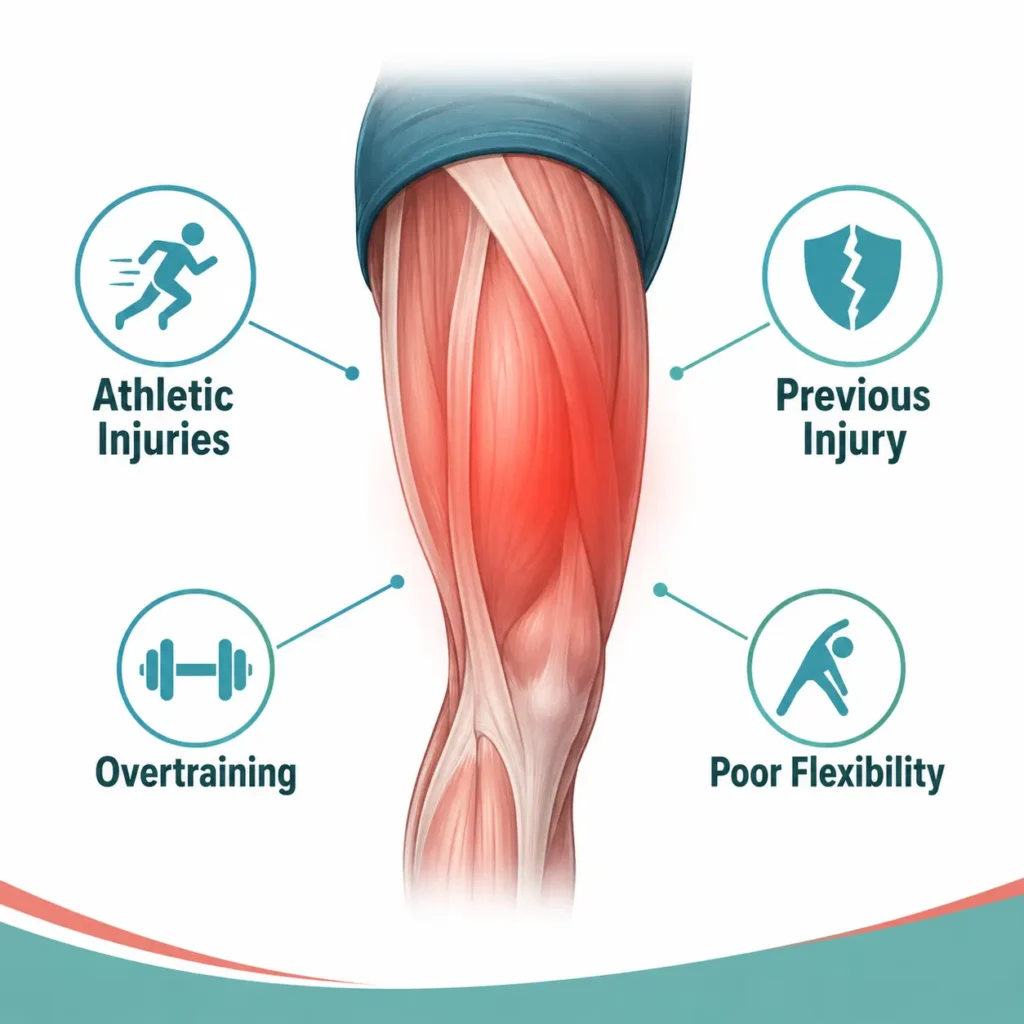
Most hamstring tears result from extreme stretching or overload during sport, commonly seen in soccer, football, and ice hockey. A few factors increase your risk:
- A previous hamstring injury — once torn, a hamstring is more prone to re-injury, especially if intense activity resumes before it’s fully healed
- Overtraining — pushing the hamstring beyond its capacity without adequate recovery
- Poor flexibility — limited flexibility means certain movements can stretch the muscle beyond its safe range
Older adults are also prone to hamstring tears, as flexibility naturally declines with age, and adolescent athletes face similar risk since bones and muscles grow at different rates, which can tighten the hamstring and make it more vulnerable to injury.
Symptoms of a Hamstring Strain
Common symptoms include:
- Sudden, sharp pain
- A “popping” sensation at the moment of injury
- Tenderness
- Swelling within the first few hours
- Bruising within the first few days
- Partial or complete weakness in the leg
- Inability to bear weight on the affected leg
Grading Hamstring Strains
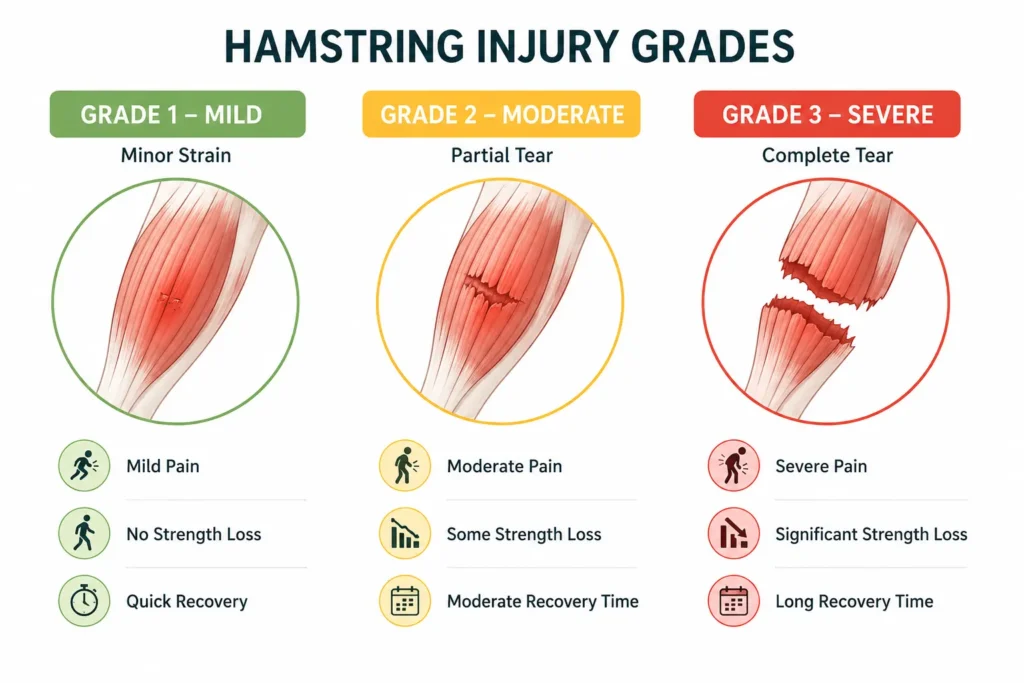
Grade 1 (Mild) — overstretching without actual tearing of muscle or tendon fibers. Symptoms may not appear until after the activity ends, with little to no loss of strength or flexibility, though tightness and pain may show up when sitting or climbing stairs.
Grade 2 (Moderate) — a partial tear in the muscle, with reduced strength and flexibility. Pain is more immediate and severe, often tender to touch, with limping likely during walking and difficulty fully straightening the knee.
Grade 3 (Severe) — a severe or complete rupture of the muscle, sometimes with a visible lump of muscle tissue above a depression at the tear site. Walking becomes very difficult, significant bruising often develops within a few days, and surgical repair may be needed.
Risk Factors for Hamstring Strains
- Age — risk increases as you get older
- Previous injury — earlier hamstring or adductor injuries raise the risk of re-injury
- Flexibility — greater hamstring flexibility is linked to lower injury risk
- Hamstring strength — weaker hamstrings are strongly associated with strain risk
- Lower back nerve issues — nerve impingement in the lower spine can contribute to hamstring weakness
- Fatigue — tired muscles lose coordination, and since the biceps femoris relies on two separate nerve pathways, fatigue can cause them to fall out of sync, increasing strain risk
- Poor warm-up — skipping a proper warm-up before explosive movements like running or jumping raises injury risk
How We Diagnose Hamstring Strains at Healthcapes
Diagnosis typically involves a physical examination assessing pain location, swelling, and muscle strength, along with a discussion of how the injury occurred. For more significant strains, we may recommend an ultrasound or MRI to determine the grade of the tear and guide your treatment plan.
Hamstring Strain Treatment in Haldwani at Healthcapes
Once we understand the grade and location of your hamstring strain, we build a treatment plan around it. This typically includes physiotherapy to restore strength and flexibility as the muscle heals, along with therapies like Deep Tissue Laser Therapy to reduce inflammation and support tissue repair. We also focus on a structured return-to-sport program, since returning too early significantly raises the risk of re-injury.
Preventing Hamstring Strains
- Warm up thoroughly before explosive activity, using dynamic, sport-specific movements
- Follow a dedicated hamstring strengthening program, especially for sprinters or high-speed athletes
- Maintain balanced strength across the thighs, pelvis, and lower back
- Stretch both before and after exercise
- Consider regular deep tissue sports massage to identify tight spots before they become injuries
Frequently Asked Questions
This depends on the grade. Mild (Grade 1) strains may heal within one to two weeks, while severe (Grade 3) tears can take several months of guided rehabilitation.
This should be guided by your therapist based on your specific recovery, not a fixed timeline. Returning too early significantly increases the risk of re-tearing the muscle.
Recurrence is common, especially if the muscle hasn’t fully regained strength and flexibility before returning to activity, or if underlying risk factors like poor warm-up habits aren’t addressed.
No, only the most severe (Grade 3) tears sometimes require surgical repair. Most Grade 1 and 2 strains respond well to physiotherapy and guided rehabilitation.