

Introduction
If you’ve been searching for the best physiotherapy clinic in Haldwani, there’s a good chance it’s because of one of three things: a back that won’t let you get through a full workday, a neck that locks up every time you check your phone, or a sharp pain shooting down your leg that just won’t go away.
You’re not alone in this. More people in Haldwani are spending long hours at desks, commuting on rough roads, or doing physically demanding work, and because of that, back pain, neck pain, and sciatica have become some of the most common reasons people end up at a clinic. What makes it frustrating isn’t really the pain itself. It’s the cycle it creates. You take a painkiller, it works for a day, the stiffness comes back, and within a week you’re dealing with the same ache all over again.
Here’s the good news though: most of these conditions don’t actually need surgery or a lifetime of medication. With the right physiotherapy approach, your body can heal properly, regain its movement, and build enough strength to stop the pain from coming back. This guide will walk you through what usually causes these conditions, how physiotherapy actually helps, and what to look for when picking a clinic in Haldwani.
Understanding Back Pain, Neck Pain & Sciatica
Before getting into treatment, it helps to understand what’s actually happening inside your body.
What Causes These Conditions
Back and neck pain rarely just shows up out of nowhere. There’s usually something building up behind it. Poor posture is probably the biggest one: slouching at your desk, looking down at your phone for hours, or sleeping in positions that twist your spine all night. Then there’s the sedentary lifestyle factor. If your core and back muscles are weak, they simply can’t support your spine the way they’re supposed to, so things start to give.
Sometimes it’s more sudden. A muscle strain or injury, like lifting something the wrong way or making a quick, awkward movement, can trigger pain almost overnight. And then there’s the natural wear and tear that comes with age, what doctors call degenerative changes in the discs and joints. In some cases, this progresses into a slip disc or herniated disc, where the cushion between your vertebrae starts pressing on nearby nerves.
Sciatica usually comes from one of these same root causes. A compressed or irritated sciatic nerve, often because of a disc issue or a tight piriformis muscle, is what leads to that sharp pain running down the leg. Getting the actual cause diagnosed correctly, rather than guessing, is exactly where a good physiotherapy clinic in Haldwani makes the biggest difference.
Common Symptoms
The symptoms can look a little different depending on what’s actually going on, but a few red flags show up again and again. A dull ache that just won’t go away in your lower back or neck. Sharp pain that shoots down one leg, which is usually a telltale sign of sciatica. Stiffness that feels worse first thing in the morning or after you’ve been sitting for too long.
Some people also notice tingling or numbness, that “pins and needles” feeling, along with a reduced range of motion when they try to turn their neck or bend their back. And every now and then, there are sudden muscle spasms or sharp jolts of pain with certain movements.
When to Seek Treatment
Feeling a bit stiff after a long day is completely normal. But there’s a point where it’s worth getting checked out instead of just waiting it out. If the pain has lasted more than two or three weeks, that’s usually a sign. Same goes for when it starts affecting your sleep, your work, or just your ability to get through the day normally.
Numbness, tingling, or weakness in your arms or legs is something you shouldn’t ignore either. And if the pain keeps coming back no matter how much rest you give it, that’s your body telling you it’s time to see a qualified physiotherapist in Haldwani. Brushing these signs aside often turns what could’ve been a quick fix into a much longer, more complicated recovery.
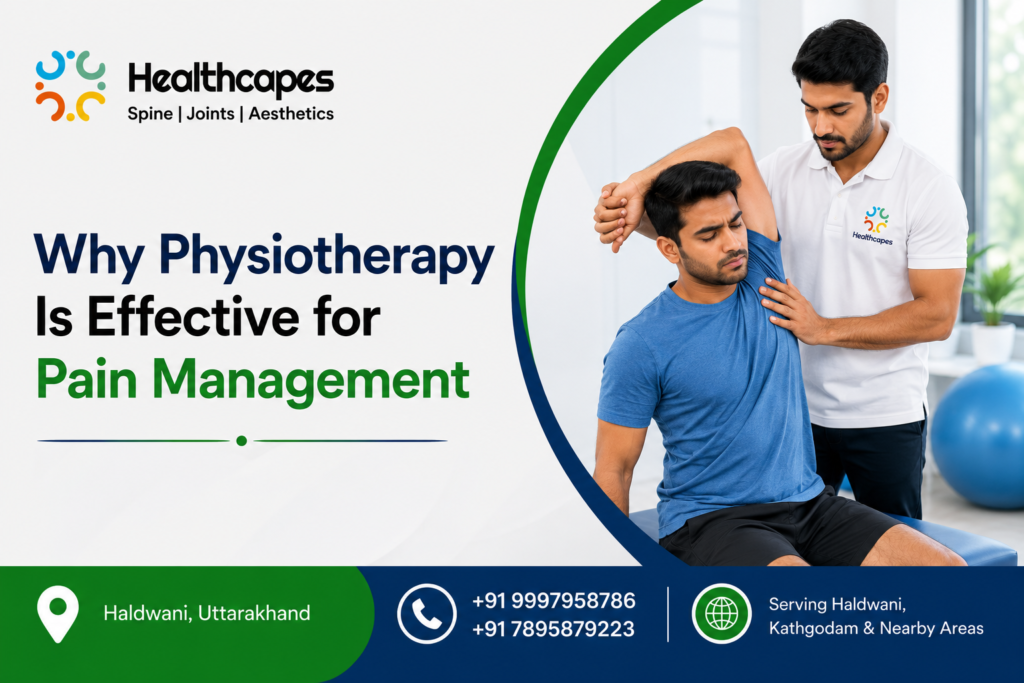
Why Physiotherapy Is Effective for Pain Management
Physiotherapy isn’t just about stretching. It’s a structured, evidence-based way of treating the actual cause of pain instead of simply masking it for a few hours, which is exactly the kind of care you should expect from the best physiotherapy clinic in Haldwani.
Drug-Free Approach
Painkillers numb the sensation for a while, but they don’t fix anything. Physiotherapy works on the real source of the problem: tight muscles, weak supporting structures, poor joint mechanics, or nerve compression. For people who’d rather avoid the side effects that come with long-term medication use, this makes it a much safer option in the long run.
Movement Restoration
When something hurts, the natural reaction is to move less. The problem is that this often makes things worse, since stiffness and muscle weakness build up even further. Physiotherapy uses targeted techniques to gradually bring back normal movement patterns, so you can bend, twist, and walk again without bracing for pain every time.
Long-Term Prevention
A good physiotherapy plan doesn’t just stop the moment the pain disappears. It usually includes posture correction, strengthening exercises, and some lifestyle guidance, all aimed at making sure the same problem doesn’t show up again in a few months. That’s also why most physiotherapists recommend continuing treatment even after the acute pain has settled down.
Common Conditions Treated Through Physiotherapy
Physiotherapy covers a lot more ground than most people realize. Chronic back pain is one of the most common, usually built up over time from poor posture, weak core muscles, or an old injury that never fully healed. Neck stiffness is another frequent one, often the result of too much screen time or sleeping in the wrong position night after night.
Sciatica falls under this list too, caused by disc compression or tight muscles pressing on the nerve. So does slip disc, where a herniated or bulging disc presses directly on the spinal nerves. A lot of people also come in with posture-related pain from sitting at a desk all day, the kind that eventually turns into “tech neck” or rounded shoulders. And of course, sports injuries like sprains, strains, and overuse injuries are a regular part of what physiotherapy treats as well.
If you’re dealing with any of these and looking for reliable back pain treatment, neck pain treatment, or sciatica treatment in Haldwani, physiotherapy is usually the safest and most effective place to start, well before surgery is ever considered.
Treatment Approaches Used in Modern Physiotherapy
A good physiotherapy clinic doesn’t run everyone through the same routine, and this is one of the things that sets the best physiotherapy clinic in Haldwani apart from a generic one. Here’s roughly what a proper treatment process looks like.
A good physiotherapy clinic doesn’t run everyone through the same routine, and this is one of the things that sets the best physiotherapy clinic in Haldwani apart from a generic one. Here’s roughly what a proper treatment process looks like.
Detailed Assessment
Every plan starts with actually understanding your condition. That means posture analysis, movement testing, and a look at your medical history, all aimed at finding the real cause of the pain rather than just treating the symptoms you walked in with.
Manual Therapy
Hands-on techniques like joint mobilization and soft tissue release help loosen things up. They reduce stiffness, ease muscle tension, and improve blood flow in the area that’s been giving you trouble.
Exercise Therapy
This is where the real long-term work happens. Targeted strengthening exercises rebuild the muscles supporting your spine and joints, which matters both for getting better now and for making sure the problem doesn’t keep coming back.
Stretching & Mobility Work
Controlled stretching helps restore flexibility and range of motion. It’s especially useful for a stiff neck or a tight lower back that’s stopped moving the way it used to.
Electrotherapy
In the earlier stages, modalities like TENS, ultrasound therapy, or interferential therapy can help bring down inflammation and ease the pain enough for other treatments to start working better.
Rehabilitation Plans
A structured, progressive plan moves you from simply feeling less pain to a full functional recovery, eventually getting you back to your normal routine without any restrictions holding you back.
Signs You Should Visit a Physiotherapist
Not sure if it’s time to book an appointment? Here’s what usually means it’s worth getting checked:
- Pain that’s lasted more than a few weeks despite rest and home care
- Tingling or numbness in your arms, legs, hands, or feet
- Trouble bending, turning, or lifting the way you used to
- Sitting becomes uncomfortable the longer you’re at your desk or traveling
- The pain keeps showing up every few weeks or months, no matter what you do
If even one or two of these sound familiar, it’s worth getting a proper assessment at the best physiotherapy clinic in Haldwani rather than just hoping it sorts itself out.
Why Choose Healthcapes for Physiotherapy in Haldwani
When pain is affecting your daily life, the clinic you choose ends up mattering just as much as the treatment itself. At Healthcapes, the focus is on personalized, evidence-based physiotherapy care built around each patient’s actual condition, not a generic routine handed out to everyone who walks in.
Every patient is assessed individually, and the treatment plan is shaped around their specific diagnosis, lifestyle, and recovery goals. Care is delivered by experienced physiotherapists who combine manual therapy, exercise-based rehabilitation, and modern treatment techniques rather than relying on just one method. This patient-first approach is exactly what makes Healthcapes the best physiotherapy clinic in Haldwani, and it’s also centered on fixing the root cause of the problem instead of offering short-term relief that wears off in a week.
Whether it’s an acute injury or a chronic, recurring issue, treatment plans at Healthcapes are designed to handle both the immediate pain and the long-term prevention side of things. Communication stays clear throughout, with realistic recovery timelines and practical guidance on posture and lifestyle changes you can actually follow between sessions. And being based right here in Haldwani means you get access to quality physiotherapy without having to travel to a bigger city for it.
Frequently Asked Questions
1. Can physiotherapy cure sciatica?
In most cases, yes. Physiotherapy can reduce sciatic nerve pain by relieving pressure on the nerve through targeted exercises, stretching, and manual therapy. How well it works really depends on the underlying cause and how early you start treatment.
2. How many sessions are needed?
That depends on the condition and how severe it is. Some mild cases improve in 6 to 8 sessions. Chronic or more complicated issues, like a slip disc, can take several weeks of rehabilitation. Your physiotherapist will be able to give you a clearer idea once they’ve assessed you.
3. Is physiotherapy painful?
Generally, no. You might feel some mild discomfort if your muscles are very tight or inflamed, but the whole point is to work within a range that’s manageable. If something genuinely hurts during a session, tell your therapist right away.
4. Can neck pain be treated without surgery?
Yes, most of the time. Manual therapy, posture correction, and the right strengthening exercises are usually enough to resolve stiffness and pain, even in cases that seem fairly severe.
5. When should I start physiotherapy?
As soon as the pain sticks around for more than a few days or starts getting in the way of your daily routine. Starting early almost always means a faster recovery, and it helps stop short-term pain from turning into something chronic.
6. Is physiotherapy effective for posture-related pain from desk jobs?
Definitely. What people call “tech neck” or postural back pain usually comes down to long hours of sitting and poor ergonomics. Physiotherapy tackles this with targeted stretches, strengthening work, and practical advice for setting up your workstation better, so the discomfort eases up even if you’re still at your desk every day.
7. Can physiotherapy help prevent back pain from returning?
Yes, and this is actually one of its biggest strengths. A proper physiotherapy program goes beyond just relieving pain. It includes core strengthening, posture correction, and movement retraining that address the weaknesses that caused the problem in the first place, which lowers the odds of it coming back.
8. What should I expect during my first physiotherapy session?
Your first visit usually starts with a detailed assessment: a conversation about your symptoms and medical history, some posture and movement testing, and a look at any scans or reports you might have. From there, the physiotherapist will explain what’s likely causing your pain and walk you through a personalized treatment plan before any hands-on therapy begins.
Conclusion
Back pain, neck pain, and sciatica don’t have to be something you just learn to live with. With the right physiotherapy approach, one built on a proper assessment, hands-on treatment, and a long-term recovery plan, most people get back to moving freely and living without constant pain.
If you’re in Haldwani and tired of the cycle of temporary relief followed by the same pain coming back, it’s time to get assessed by a team that treats the actual cause, not just the symptom. For anyone looking for the best physiotherapy clinic in Haldwani, this is exactly where to start.
Book a consultation with Healthcapes today and take the first step toward lasting recovery.