
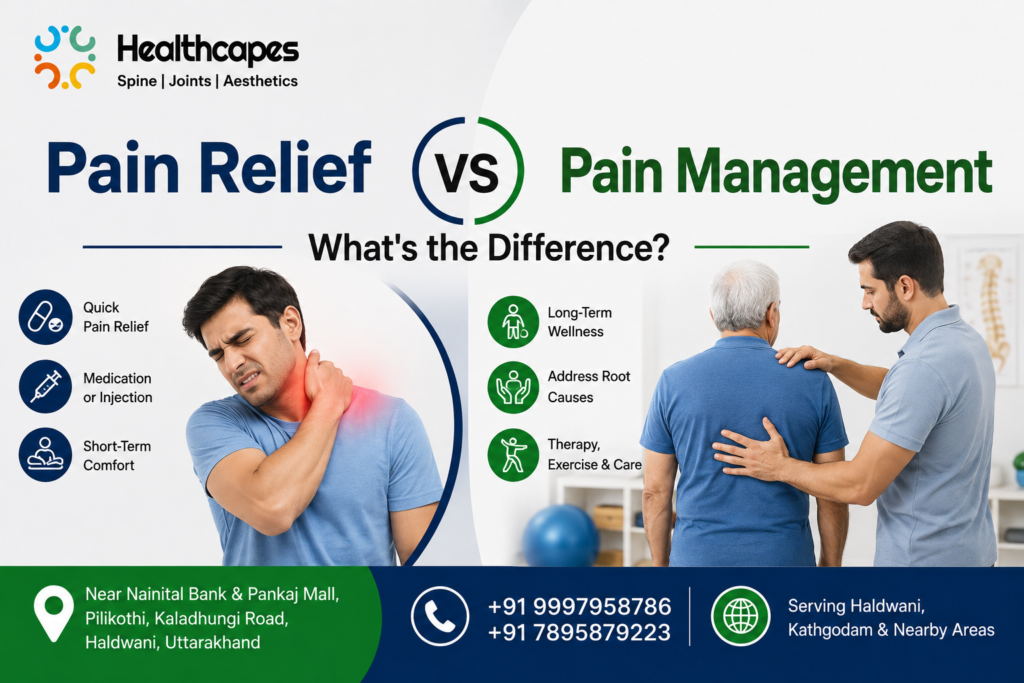
Pain Relief vs. Pain Management: What’s the Difference?
When physical discomfort strikes whether it is a sudden sprain or a persistent ache in your lower back finding dynamic, effective comfort becomes your primary focus. However, when seeking help, you often hear two terms used interchangeably: pain relief vs. pain management. While they sound similar on the surface, they represent two fundamental approaches to treating bodily pain.
Understanding the distinction between pain relief vs. pain management is crucial for making informed decisions about your health, choosing the right medical specialists, and setting realistic expectations for recovery.
In this comprehensive guide, we will break down what each term means, how their treatment strategies differ, when to use each approach, and how combining both can help you restore your quality of life.
Understanding the Basics: Acute vs. Chronic Pain
To grasp the difference between pain relief vs. pain management, you first need to understand the two main types of physical discomfort: acute pain and chronic pain.
What Is Acute Pain?
Acute pain is your body’s natural alarm system. It is a direct response to a sudden tissue injury, illness, or medical procedure.
- Onset: Sudden and sharp.
- Duration: Short-term (lasts a few hours, days, or weeks).
- Cause: Clear and identifiable (e.g., a cut, bone fracture, toothache, or post-surgical surgical wound).
- Outcome: Resolves completely as the underlying injury heals.
What Is Chronic Pain?
Chronic pain is persistent discomfort that outlasts the body’s normal healing period. It is often defined as pain that continues for more than three to six months.
- Onset: Gradual or persistent after an initial injury.
- Duration: Long-term (months, years, or lifetime).
- Cause: Complex (e.g., arthritis, nerve damage, fibromyalgia, or spinal degeneration).
- Outcome: Requires ongoing strategies rather than a quick cure.
This brings us to the core distinction: pain relief is primarily designed for acute pain, whereas pain management is built to navigate chronic pain.
What Is Pain Relief?
Pain relief refers to short-term interventions designed to interrupt pain signals and eliminate or significantly reduce physical discomfort as quickly as possible. The main goal of pain relief is fast, immediate comfort.
How Pain Relief Works
When tissue damage occurs, nerve endings send distress signals to your brain. Pain relief treatments work by blocking these neural pathways, reducing tissue inflammation, or changing how your brain perceives pain signals.
Key Characteristics of Pain Relief
- Immediate Action: Focuses on providing fast, noticeable comfort within minutes or hours.
- Symptom-Focused: Targets the immediate sensation of pain rather than addressing long-term lifestyle factors.
- Temporary Nature: Designed to be used for a short duration until the body heals naturally.
- Passive Interventions: Often involves taking a medication or applying a treatment without requiring active behavioral changes.
Common Examples of Pain Relief Treatments
- Over-the-Counter (OTC) Medications: Nonsteroidal anti-inflammatory drugs (NSAIDs) like ibuprofen or naproxen, and analgesics like acetaminophen.
- Topical Treatments: Cooling gels, heating pads, menthol rubs, or numbing creams.
- Prescription Analgesics: Short courses of prescription pain medications for post-surgical recovery or severe injury.
- Immediate First Aid: RICE protocol (Rest, Ice, Compression, Elevation) for joint sprains or muscle strains.
If you are dealing with sudden joint pain or sports injuries, exploring Healthcapes Pain Relief Resources can help you identify immediate home remedies and safe medication guidelines.
What Is Pain Management?
While pain relief acts as a quick-acting solution, pain management is a long-term, multidisciplinary medical strategy. It aims to reduce chronic pain, improve physical function, and restore daily quality of life, even when the underlying cause cannot be completely eliminated.
How Pain Management Works
Pain management looks at the whole person rather than just the isolated spot that hurts. Chronic pain affects sleep, mood, mobility, and mental well-being. Therefore, pain management involves a team of specialists including pain physicians, physical therapists, chiropractors, and psychologists working together on an ongoing care plan.
Key Characteristics of Pain Management
- Long-Term Focus: Structured around weeks, months, or years of coordinated care.
- Functional Improvement: Prioritizes helping you walk, work, sleep, and move comfortably over simply numbing the pain.
- Active Participation: Requires patient involvement through physical exercises, lifestyle changes, and posture correction.
- Multidisciplinary Strategies: Combines medical, physical, and psychological techniques.
Core Components of Pain Management
- Physical Therapy & Rehabilitation: Custom exercises designed to strengthen supporting muscles, improve joint mobility, and fix postural imbalances.
- Interventional Procedures: Epidural steroid injections, nerve blocks, radiofrequency ablation, or joint injections.
- Lifestyle Modifications: Anti-inflammatory nutrition, weight management, ergonomic adjustments, and sleep hygiene.
- Mind-Body Therapies: Cognitive Behavioral Therapy (CBT), mindfulness practices, and stress reduction techniques to reframe how the brain processes chronic nerve signals.
To learn more about developing a sustainable routine for long-term health, check out our guide on Chronic Health Strategies at Healthcapes.
Pain Relief vs. Pain Management: Side-by-Side Comparison
To clearly understand pain relief vs. pain management, let us look at their primary differences side-by-side:
| Feature | Pain Relief | Pain Management |
| Primary Goal | Stop or dull immediate pain | Improve daily function and long-term quality of life |
| Target Condition | Acute pain (sprains, cuts, post-surgery) | Chronic pain (arthritis, nerve pain, spinal issues) |
| Timeframe | Short-term (hours to weeks) | Long-term (months to years) |
| Treatment Approach | Symptom-focused | Root-cause and whole-person focused |
| Patient Role | Passive receiver of medication/treatment | Active participant in exercises and habits |
| Primary Methods | OTC medicines, ice/heat, temporary rest | Physical therapy, injections, lifestyle changes, therapy |
| Success Metric | Elimination of the pain score (0/10) | Better mobility, sleep, and overall life quality |
Key Differences Between Pain Relief and Pain Management
1. The Timeline and Expectations
The most significant difference when considering pain relief vs. pain management is time.
Pain relief aims for immediate, total elimination of pain. When you take a headache pill, you expect the headache to vanish within 30 minutes.
Pain management, on the other hand, acknowledges that certain chronic conditions like osteoarthritis or spinal stenosis may not vanish entirely. Instead, the goal is to lower the pain level from an unbearable 8/10 to a manageable 2/10, allowing you to return to work, hobbies, and active living without relying solely on high-dose medications.
2. Treatment Depth: Quick Fix vs. Root Cause
Pain relief acts like placing a patch over a leaky pipe; it stops the drip temporarily. Pain management investigates the plumbing system, reinforces weak pipes, and alters water pressure so the leak does not flood the house again.
For example, taking a daily pain reliever for lower back discomfort offers temporary pain relief. However, a pain management program evaluates your core strength, spinal alignment, desk ergonomics, and hamstring flexibility to fix the strain permanently.
3. Dependence vs. Empowerment
Relying exclusively on pain relief methods over long periods can sometimes lead to medication tolerance, side effects (such as stomach ulcers from overuse of NSAIDs), or emotional frustration.
Conversely, pain management empowers you with self-care tools. You learn specific stretching routines, breathing exercises, and ergonomic posture fixes that give you direct control over your body’s comfort levels.
When Do You Need Pain Relief vs. Pain Management?
Knowing which path to take depends on your specific symptoms, the duration of your pain, and your medical history.
Choose Pain Relief When You Have:
- A recent sports injury, like an ankle sprain or muscle pull.
- Dental pain after a procedure or tooth cavity repair.
- Post-operative discomfort following minor or major surgery.
- A temporary tension headache or acute sunburn.
- Minor cuts, bruises, or sudden soft-tissue inflammation.
Choose Pain Management When You Have:
- Back or neck pain that lasts longer than three months.
- Chronic arthritis or persistent joint stiffness.
- Neuropathic pain (nerve damage, sciatica, diabetic neuropathy).
- Unexplained conditions like fibromyalgia or chronic fatigue syndrome.
- Recurring migraines that interfere with weekly activities.
If your symptoms fall into the chronic category, consulting a specialist is essential. Explore our directory of expert insights at Healthcapes Wellness Articles to find guidance on finding specialized clinics near you.
Common Interventions Used in Both Approaches
While pain relief vs. pain management are distinct strategies, they frequently intersect. Modern medicine often uses pain relief as an entry point into a broader pain management plan.
1. Pharmacological Approaches (Medications)
- For Relief: Short-term use of analgesics, NSAIDs, muscle relaxers, or short-acting nerve blocks.
- For Management: Low-dose nerve stabilizers (like gabapentin), long-term anti-inflammatory strategies, or targeted topical patches.
2. Physical & Rehabilitation Therapies
- For Relief: Soft tissue massage, cold laser therapy, and passive stretching to soothe acute spasms.
- For Management: Core strengthening exercises, gait retraining, resistance training, and joint mobilization techniques.
3. Interventional Procedures
- For Relief: Emergency trigger point injections to break up a severe muscle spasm.
- For Management: Scheduled fluoroscopy-guided epidural injections, facet joint blocks, or radiofrequency ablation (RFA) to provide months of sustained comfort.
4. Lifestyle and Behavioral Health
- For Relief: Taking temporary sick leave, resting an injured limb, or using supportive braces.
- For Management: Structured sleep architecture improvements, anti-inflammatory dietary plans, stress-reduction techniques, and ergonomic workspace re-design.
How Pain Relief and Pain Management Work Together
It is a mistake to think of pain relief vs. pain management as an “either/or” choice. In reality, the best medical care integrates both seamlessly.
Imagine a patient suffering from severe knee osteoarthritis. The pain is so severe (8/10) that they cannot walk on a treadmill or participate in physical therapy.
- Step 1 (Pain Relief): The doctor provides a knee joint injection or short-term anti-inflammatory medication. This reduces the pain score down to a 3/10 within a few days.
- Step 2 (Pain Management): Now that the patient can move comfortably, they begin physical therapy to build quad strength, reduce joint load, and modify their daily gait.
Here, pain relief provided the necessary doorway, while pain management delivered the long-term solution. Without initial relief, management was impossible; without management, the relief would have worn off in weeks, leaving the patient right back where they started.
Tips for Building a Personal Pain Strategy
If you are currently living with discomfort, here is a practical step-by-step approach to navigate your path:
- Track Your Symptoms: Keep a 7-day pain diary noting when the pain spikes, its intensity (1-10), what triggers it, and what relieves it.
- Avoid Over-Reliance on Quick Fixes: If you find yourself taking over-the-counter painkillers daily for more than two weeks, stop and consult a doctor.
- Seek a Comprehensive Evaluation: Ask your primary physician whether a referral to a physical therapist, pain clinic, or physiatrist is appropriate.
- Focus on Function Over Zero Pain: Measure your progress by what you can do like walking an extra 1,000 steps or playing with your kids rather than waiting for 100% absence of pain.
- Prioritize Anti-Inflammatory Habits: Focus on restorative sleep, hydration, stress management, and nutrient-dense whole foods.
For more deep dives into healthy living and physical wellness, visit Healthcapes.
Conclusion
Understanding pain relief vs. pain management changes how you treat your body. Pain relief acts as your emergency responder offering rapid comfort when an unexpected injury occurs. Pain management acts as your architect building a durable, long-term blueprint for strength, mobility, and lifelong quality of living.
By recognizing when to use quick-acting relief and when to transition into a structured management program, you can take full control of your health journey and live an active, fulfilling life.
FAQS
1. What is the primary difference between pain relief vs. pain management?
The primary difference between pain relief vs. pain management is their timeframe and objective. Pain relief focuses on short-term, immediate elimination of acute pain (like a sprain or headache). Pain management is a long-term, multidisciplinary plan designed to reduce chronic pain and restore daily functional mobility.
2. Can pain relief medications be part of a long-term pain management plan?
Yes, but they are used differently. In a pain management plan, medications are prescribed carefully alongside physical therapy and lifestyle modifications to avoid dependency, tolerance, or gastrointestinal side effects associated with long-term use.
3. Is physical therapy considered pain relief or pain management?
Physical therapy can provide acute relief through manual therapy or heat/cold application, but it is primarily a core component of pain management. It helps rebuild muscle strength, improves flexibility, and corrects structural imbalances to prevent pain from returning.
4. When should I transition from pain relief to pain management?
You should transition to pain management if your physical discomfort lasts longer than 3 to 6 weeks, recurs constantly, or does not respond to basic rest and over-the-counter pain relievers.
5. Does pain management mean I will never be 100% pain-free?
Not necessarily. While some chronic conditions (like severe spinal degeneration) cannot be completely cured, effective pain management often reduces pain levels so significantly that patients can live active, comfortable lives without pain interfering with their daily routines.
6. What types of specialists work in pain management?
A pain management team typically includes board-certified pain medicine physicians, physiatrists (physical medicine doctors), physical therapists, neurologists, orthopedists, chiropractors, and cognitive behavioral psychologists.
7. Are non-medical therapies like acupuncture useful for pain management?
Yes. Complementary therapies such as acupuncture, massage therapy, mindfulness meditation, and yoga are widely recognized as beneficial supporting components in a holistic pain management strategy.
8. What are the risks of relying only on pain relief for chronic pain?
Relying solely on short-term pain relief (like daily NSAIDs or opioids) for chronic conditions can mask underlying structural damage, lead to organ stress (stomach, liver, or kidney issues), build medication tolerance, and fail to fix the movement problems causing the pain.