
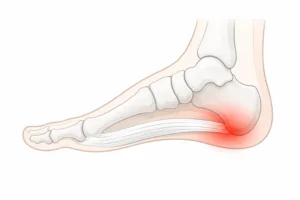
Plantar Fasciitis
Plantar Fasciitis Treatment in Haldwani
Plantar Fasciitis Treatment in Haldwani at Healthcapes addresses one of the most common causes of heel pain, inflammation of the plantar fascia, a tough band of tissue running along the sole of your foot from the heel to the base of your toes. This tissue plays an important role in supporting your foot’s arch and normal walking mechanics. Every time you stand, walk, or push off on your toes, tension in the fascia increases, and over time or with overuse, it can lose some of its resilience and become irritated with everyday activity.
What Causes Plantar Fasciitis

Ankle sprains are graded by severity:
- Mild (Grade I) — ligaments are stretched but not torn. The ankle still feels stable, with some pain and stiffness.
- Moderate (Grade II) — one or more ligaments are partially torn. The joint isn’t fully stable, movement is limited, and there’s swelling with moderate pain.
- Severe (Grade III) — one or more ligaments are completely torn, leaving the ankle unstable, with significant pain and very limited movement.
Symptoms of Plantar Fasciitis
Plantar fasciitis causes pain in the heel that’s typically worse with your first steps in the morning or after sitting for a long stretch. It tends to ease somewhat with activity, but often returns after standing for extended periods.
Who's at Higher Risk
You’re more likely to develop plantar fasciitis if you:
- Are female
- Are between 40 and 60 years old
- Are living with obesity
- Have flat feet or high arches
- Have tight Achilles tendons
- Have an unusual walking pattern or foot position
- Frequently wear high-heeled shoes
- Spend many hours standing each day
- Wear worn-out shoes with thin soles
How We Diagnose Plantar Fasciitis at Healthcapes
Diagnosis typically starts with a discussion of your symptoms and a physical examination to identify exactly where your pain is coming from. We may recommend an X-ray to rule out a bone fracture or arthritis, or an MRI for a more detailed look if the diagnosis isn’t fully clear.
Plantar Fasciitis Treatment in Haldwani at Healthcapes
Once we understand what’s contributing to your plantar fasciitis, we build a treatment plan around it. This typically includes physiotherapy to stretch and strengthen the foot and calf, along with therapies like Deep Tissue Laser Therapy or Shock Wave Therapy to reduce inflammation and support healing. We also work with you on footwear and activity adjustments, since addressing these contributing factors is key to lasting relief.
Frequently Asked Questions
Overnight, the fascia tightens while at rest. Your first steps stretch it suddenly, which is why morning pain is often the most noticeable symptom.
This varies by severity, but many patients see meaningful improvement within a few weeks to a couple of months of consistent treatment.
Yes, in the vast majority of cases. Physiotherapy, footwear changes, and targeted treatment are effective for most patients, with surgery rarely needed.
Yes, especially if contributing factors like footwear, activity load, or tightness aren’t addressed. Continuing stretching and supportive footwear helps reduce recurrence.
