
Bursitis
Bursitis Treatment in Haldwani
Bursitis Treatment in Haldwani at Healthcapes starts with understanding exactly what’s causing your joint pain, not just treating the discomfort on the surface. Bursitis happens when the small, fluid-filled cushions around your joints, called bursae, become inflamed, and it can make everyday movements like reaching, kneeling, or walking genuinely painful. The good news is that bursitis usually responds well to the right treatment, and most people see real improvement within a few weeks when it’s managed properly.
What Is Bursitis?
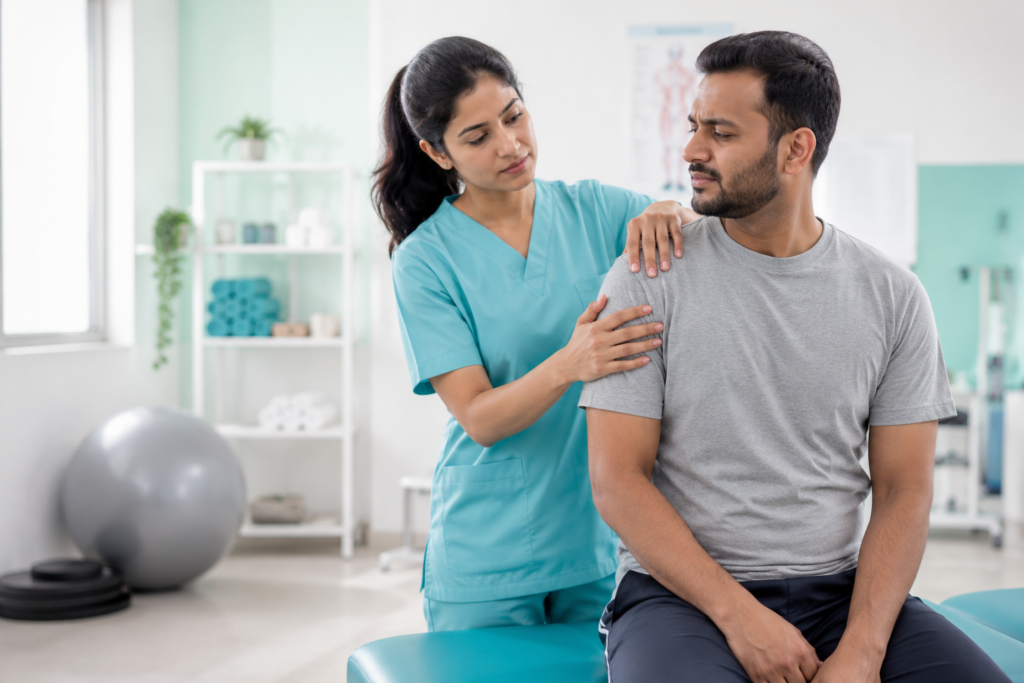
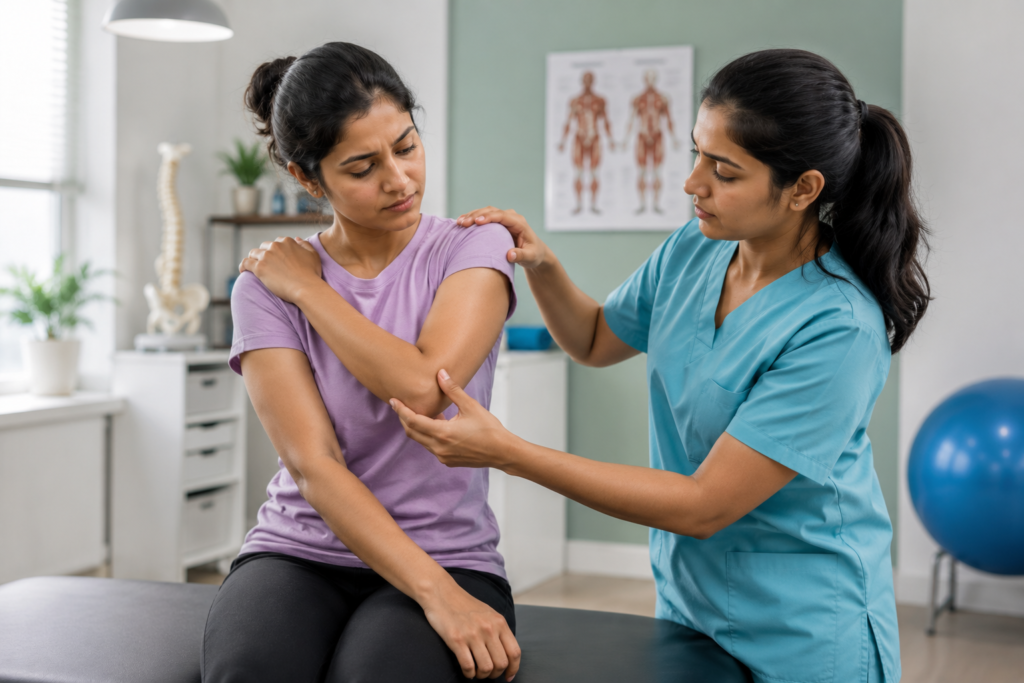
Your joints are cushioned by small sacs of fluid called bursae, which sit between bones, tendons, and muscles to reduce friction during movement. When one of these sacs becomes irritated or inflamed, that’s bursitis. It tends to show up most often in the shoulder, elbow, and hip, though it can also affect the knee, heel, or the base of the big toe. Joints that go through a lot of repetitive motion are especially prone to it.
What Causes Bursitis?
Bursitis is usually the result of repeated pressure or motion on a joint over time. Some common examples we see at our clinic include:
- Repetitive overhead motions, like throwing or lifting
- Leaning on your elbows for extended periods
- Extensive kneeling, such as during flooring or cleaning work
It can also develop after a direct injury to the joint, or as a result of conditions like rheumatoid arthritis, gout, or infection.
Symptoms to Watch For
If bursitis is affecting a joint, you might notice:
- A dull ache or stiffness that doesn’t quite go away
- Pain that gets worse with movement or pressure
- Visible swelling or redness around the joint
Who's at Higher Risk?
Bursitis can affect anyone, but a few factors make it more likely:
- Age — it becomes more common as we get older
- Occupation or hobbies — repetitive tasks like tiling, gardening, painting, or playing an instrument increase the risk
- Other health conditions — rheumatoid arthritis, gout, and diabetes can all raise your risk, and carrying extra weight adds pressure to the hips and knees in particular
How We Diagnose Bursitis at Healthcapes
Diagnosis usually starts with a conversation about your symptoms and a physical examination of the affected joint. In most cases, that’s enough to confirm bursitis. If needed, we may also recommend imaging like an ultrasound or MRI to rule out other causes, or in some cases, lab tests to check for an underlying condition contributing to the inflammation.
Bursitis Treatment in Haldwani at Healthcapes
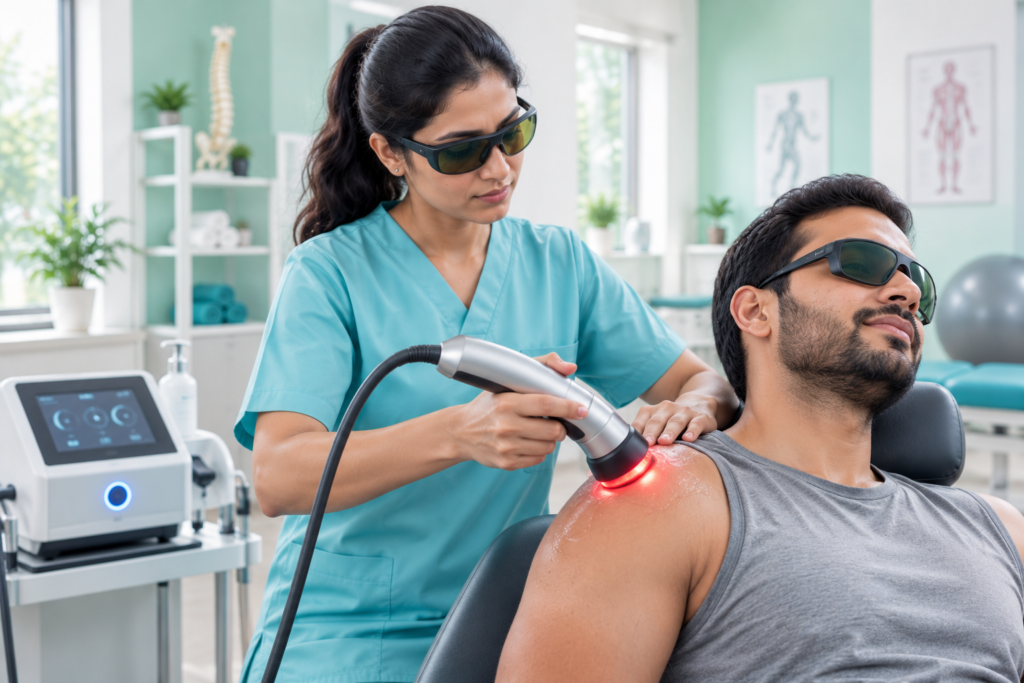
Treatment typically starts with rest and protecting the joint from further strain, but that’s often just the beginning. At Healthcapes, we build a plan around your specific case, which may include targeted physiotherapy, Shock Wave Therapy, or Deep Tissue Laser Therapy to reduce inflammation and support recovery, depending on how your body responds and how long you’ve been dealing with the pain.
We also help you understand what’s triggering flare-ups in the first place, whether that’s a work habit, a repetitive movement, or posture, so you’re not just treating the pain but reducing the chances of it coming back.
Frequently Asked Questions
Most cases improve within a few weeks with proper treatment, though this varies depending on the joint affected and how early treatment begins.
Yes, flare-ups are common, especially if the underlying cause, like repetitive motion or pressure on the joint, isn’t addressed alongside treatment.
No. Bursitis affects the fluid-filled sacs cushioning your joints, while arthritis affects the joint itself. They can sometimes occur together, which is why a proper diagnosis matters.
Rarely. Most cases respond well to non-surgical treatment like rest, physiotherapy, and targeted therapies. Surgery is only considered in persistent, severe cases.