
Tennis Elbow Treatment

Tennis Elbow Treatment in Haldwani

Tennis Elbow Treatment in Haldwani at Healthcapes helps patients dealing with lateral epicondylitis, inflammation of the tendons that bend your wrist backward, most commonly affecting a tendon called the extensor carpi radialis brevis. It’s typically diagnosed in people between 30 and 50 years old, and despite the name, most people who develop it have never picked up a tennis racket in their life.

What Causes Tennis Elbow

Your joints are cushioned by small sacs of fluid called bursae, which sit between bones, tendons, and muscles to reduce friction during movement. When one of these sacs becomes irritated or inflamed, that’s bursitis. It tends to show up most often in the shoulder, elbow, and hip, though it can also affect the knee, heel, or the base of the big toe. Joints that go through a lot of repetitive motion are especially prone to it.

What Causes Bursitis?

What causes tennis elbow - Healthcapes Haldwani

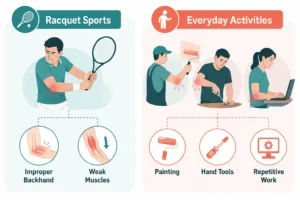
The condition gets its name because it’s often caused by the repeated force of a tennis racket hitting the ball, particularly during a backhand stroke, which strains the forearm muscles attaching to the outside of the elbow. Tennis-related causes include:

  • An improper backhand technique
  • Weak shoulder and wrist muscles
  • Using a racket that’s too tightly strung or too short
  • Other racquet sports, like racquetball or squash
  • Hitting the ball off-center, or hitting heavy, wet balls

However, tennis elbow can result from any repetitive hand or wrist movement, and many patients develop it without playing any racquet sport at all. Other common causes include:

  • Painting with a brush or roller
  • Using a chainsaw or other hand tools regularly
  • Repeated hand motions in professions like meat cutting, playing music, dentistry, or carpentry

Symptoms of Tennis Elbow

Symptoms often start as mild pain, burning, or an ache along the outside of the forearm and elbow. Left unaddressed, the pain tends to worsen and can spread down toward the wrist, sometimes even at rest. Common signs include:

  • Pain when placing your arm palm-down on a table and trying to raise your hand against resistance
  • Pain when lifting or gripping small objects, like a coffee cup
  • A noticeably weaker grip than usual

How We Diagnose Tennis Elbow at Healthcapes

Tennis elbow is usually diagnosed through a physical examination. In some cases, we may recommend additional tests, including an X-ray to check for arthritis in the elbow, an MRI to assess tendon damage or rule out neck-related causes of arm pain, or an EMG to check for nerve involvement contributing to your symptoms.

Tennis Elbow Treatment in Haldwani at Healthcapes

Once we understand the extent of your tendon inflammation, we build a treatment plan around it. This typically includes physiotherapy to strengthen the forearm and wrist muscles and correct technique or movement patterns contributing to strain, along with therapies like Deep Tissue Laser Therapy or Shock Wave Therapy to reduce inflammation and support tendon healing. We also work with you on activity modification, whether that’s adjusting your racket grip, workstation setup, or repetitive hand tool use, to reduce the risk of it returning.

Frequently Asked Questions

Not necessarily, but continuing the aggravating activity without addressing the underlying strain usually makes it worse. Your therapist can guide you on safe modifications during treatment

This varies by severity, but many patients see meaningful improvement within a few weeks to a couple of months of consistent treatment.

Yes, it’s very common in people who’ve never played tennis, often linked to repetitive work-related hand and wrist movements.

Yes, especially if the underlying cause, like technique or repetitive strain, isn’t addressed alongside treatment. Working on prevention alongside recovery helps reduce this risk.

Scroll to Top