
Patellofemoral Pain Syndrome
Patellofemoral Pain Syndrome Treatment in Haldwani
Patellofemoral Pain Syndrome Treatment in Haldwani at Healthcapes helps patients dealing with this common, painful knee condition, often known as “runner’s knee.” It relates to how your kneecap moves within the groove of your thigh bone, and it’s especially common among people involved in high-impact activities like running and jumping. The condition mostly affects teens and young adults, and tends to occur more often in females than males.
What Causes Patellofemoral Pain Syndrome
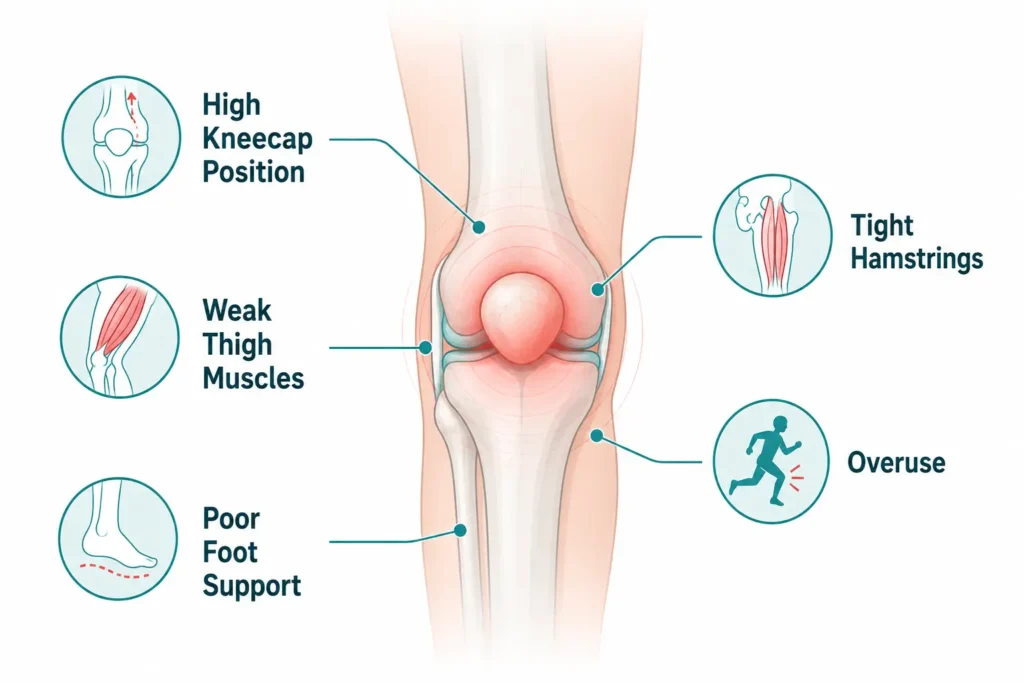
The exact cause isn’t always clear, but it’s often linked to a structural factor or a particular walking or running pattern. Common contributing factors include:
- A kneecap positioned too high within the knee joint
- Weak thigh muscles
- Tight hamstrings or Achilles tendons
- Poor foot support
- Feet rolling inward while the thigh muscles pull the kneecap outward
- Excessive training or overuse
- A previous knee injury
Symptoms of Patellofemoral Pain Syndrome
The most common symptoms include:
- Pain in and around the kneecap during activity, or after sitting for a long time with the knees bent, sometimes with a feeling of weakness or instability
- Rubbing, grinding, or clicking sounds when bending or straightening the knee
- A kneecap that’s tender to the touch
How We Diagnose Patellofemoral Pain Syndrome at Healthcapes
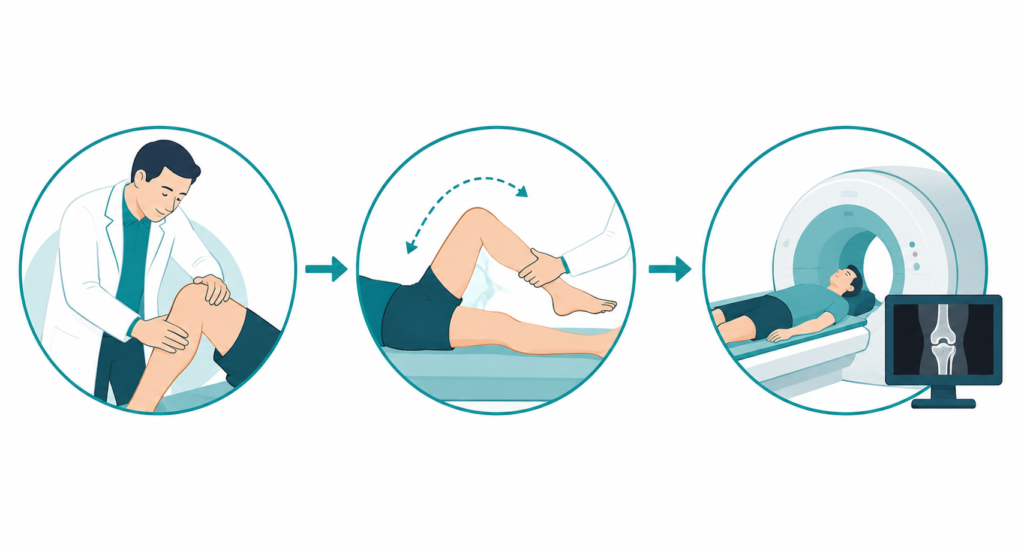
Diagnosis starts with a discussion of your symptoms and a physical examination, which typically involves pressing on the knee and moving the leg through its range of motion. Depending on what we find, we may recommend an X-ray, CT scan, or MRI to get a clearer look at the bones and soft tissue around the joint.
Patellofemoral Pain Syndrome Treatment in Haldwani at Healthcapes
Once we understand what’s contributing to your knee pain, whether that’s muscle weakness, tightness, or movement patterns, we build a treatment plan around addressing it directly. This typically includes physiotherapy to strengthen the thigh muscles and correct alignment issues, along with therapies like Deep Tissue Laser Therapy to ease inflammation. We also work with you on training load and technique adjustments, so you can return to running or your sport with a lower risk of the pain returning.
Frequently Asked Questions
No, though they can feel similar. Patellofemoral pain syndrome relates to kneecap tracking and alignment, while jumper’s knee specifically involves inflammation of the patellar tendon.
Continuing high-impact activity without addressing the underlying cause usually makes symptoms worse. Your therapist can guide you on safe activity modification during treatment.
This varies by severity, but many patients notice improvement within a few weeks of consistent physiotherapy and activity adjustment.
Strengthening the muscles supporting the knee and maintaining good running or movement technique can meaningfully reduce your risk, especially if you’ve had it before.