
Bell's Palsy Treatment

Bell’s palsy treatment in Haldwani

Brachial Plexus Injury Treatment in Haldwani at Healthcapes
Brachial Plexus Injury Treatment in Haldwani at Healthcapes supports patients dealing with damage to the bundle of nerves that runs from the neck down through the shoulder and into the arm. This nerve network controls movement in the wrist, hand, and arm, and also carries sensory information, which is why an injury here can affect both movement and feeling. It can happen to babies during a difficult birth or to adults through trauma, and the severity varies widely, from a temporary stretch injury to more serious, lasting nerve damage.

Types of Brachial Plexus Injuries

Neuropraxia (stretch injury) happens when the nerve is stretched or compressed, often described as a “burner” or “stinger,” a burning or electric-shock-like sensation. This is typically the least severe type.

Rupture occurs when a forceful stretch partially or fully tears the nerve, causing weakness and sometimes significant pain. Depending on severity, this can often be surgically repaired.

Neuroma develops when scar tissue forms around an injured nerve, sometimes creating a painful knot, and may require surgical removal.

Brachial neuritis (Parsonage-Turner syndrome) is a rare condition causing sudden, severe shoulder and arm pain that progresses to weakness and muscle loss, with an unclear cause, though it’s sometimes linked to infection, injury, or childbirth.

Avulsion is the most severe type, where the nerve root is completely separated from the spinal cord, usually from significant trauma. This often leads to permanent weakness or paralysis, since reattachment is rarely possible.

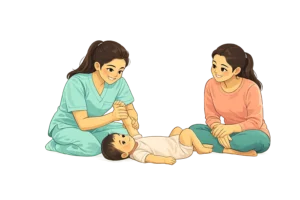
Brachial Plexus Injury at Birth

Brachial Plexus Injury at Birth - Healthcapes Haldwani

Brachial plexus injuries occur in roughly 1 to 2 out of every 1,000 births, most often in larger babies, difficult deliveries, or when labor is unusually prolonged. There are two common forms:

  • Erb’s palsy — affects the upper brachial plexus, causing shoulder numbness and difficulty flexing the elbow or bringing the hand to the mouth
  • Klumpke’s palsy — a less common form affecting the lower brachial plexus, causing loss of movement or sensation in the wrist and fingers

Many children recover naturally, and most regain most or all function with physical and occupational therapy. A smaller number may need surgical intervention, and early diagnosis and treatment genuinely improves long-term outcomes.

Causes in Adults

In adults, brachial plexus injuries commonly result from:

  • Falls or motor vehicle accidents
  • Contact sports, particularly football-type collisions
  • Trauma during surgery, such as nerve compression or injury during a procedure
  • Tumors affecting the brachial plexus
  • Radiation therapy in the area

Symptoms of a Brachial Plexus Injury

Symptoms depend on which part of the brachial plexus is affected and how severely. Common signs include:

  • Numbness or loss of feeling in the arm or hand
  • Inability to control or move the shoulder, arm, wrist, or hand
  • An arm that hangs limply
  • Burning, stinging, or sudden severe pain in the shoulder or arm

Pain and severity can range from mild and temporary, such as a simple stretch injury lasting about a week, to serious and long-lasting, particularly with a rupture or avulsion.

How We Diagnose Brachial Plexus Injuries at Healthcapes

Diagnosis starts with a physical examination checking sensation and movement in the hand and arm. We may recommend an X-ray to check for associated bone injuries, an MRI or CT scan for a detailed look at nerve damage, or nerve conduction studies and electromyography to assess nerve function and electrical activity.

Brachial Plexus Injury Treatment in Haldwani at Healthcapes

Once we understand the type and severity of your injury, we build a treatment plan around it. For milder stretch injuries, this typically includes targeted physiotherapy to restore strength and movement as the nerve heals naturally. For more significant injuries, especially in children with birth-related injuries, we focus on consistent physical and occupational therapy to maximize recovery, working alongside your treating physician when surgical intervention has been recommended.

Scroll to Top