
Migraine Treatment
Migraine Treatment in Haldwani
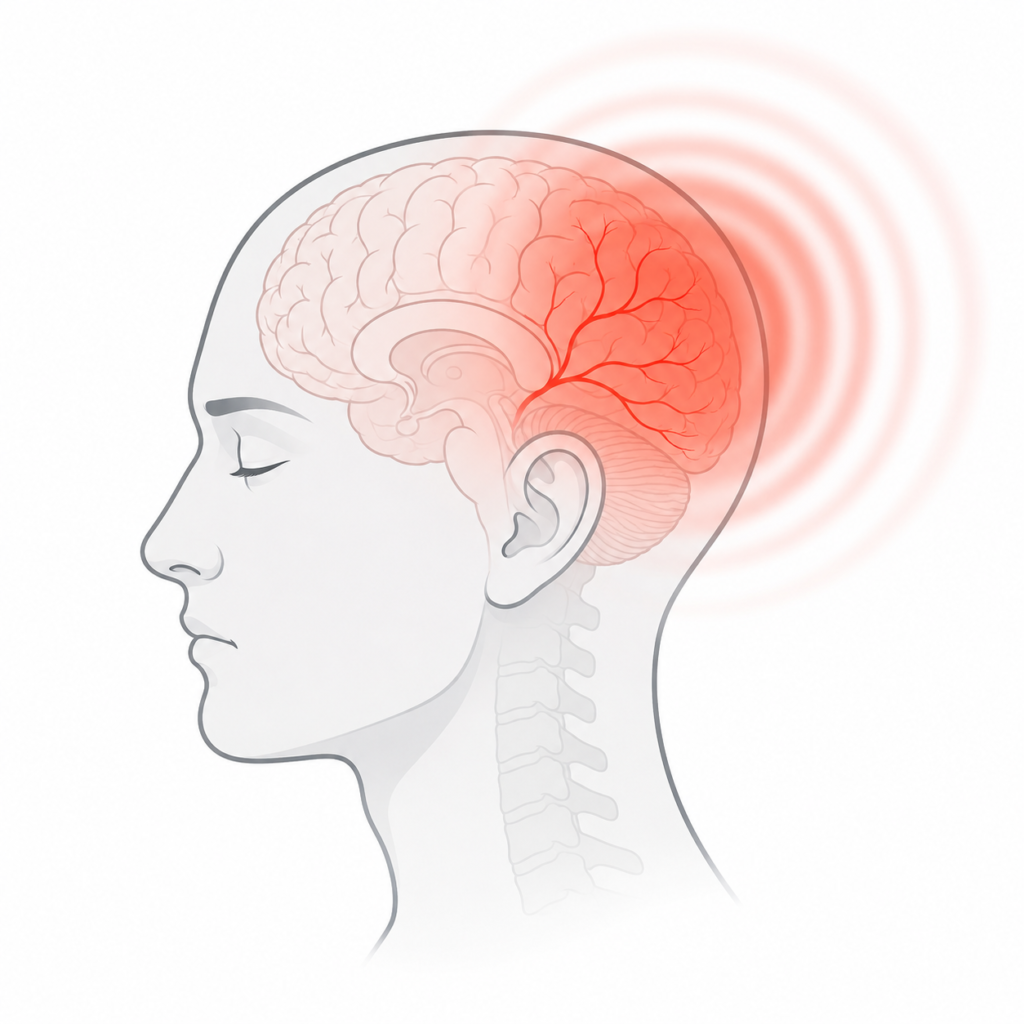
Migraine Treatment in Haldwani at Healthcapes supports patients dealing with one of the more disruptive kinds of headaches out there, an intense, pounding pain that can last for hours or even days. It usually starts in the forehead, the side of the head, or around the eyes, and tends to get progressively worse, often made worse by movement, bright light, or loud noise. Nausea and vomiting are common during an episode. For some people, migraines happen only once or twice a year; for others, they show up far more often, sometimes daily.
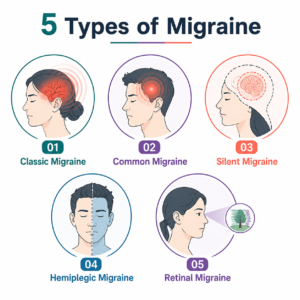
Types of Migraine

Classic migraine (with aura) starts with a warning sign called an aura, often involving visual changes like flashing lights, patterns, or temporary vision loss, sometimes along with tingling sensations or muscle weakness on one side of the body. Auras typically last 15 to 30 minutes and can occur before, during, or after the head pain.
Common migraine (without aura) is the type most people experience. It may build more gradually than classic migraine, last longer, and interfere more with daily activities.
Silent migraine causes migraine-related symptoms, like light and sound sensitivity, without the typical head pain.
Hemiplegic migraine is rare and causes temporary weakness on one side of the body, similar to stroke symptoms, though it resolves on its own, usually within 24 hours.
Retinal migraine causes vision changes or temporary vision loss in one eye, unrelated to typical aura symptoms. If you experience this, it’s important to get it checked by a doctor.
What Causes Migraines
The exact cause isn’t fully understood, but changes in the brain chemical serotonin appear to play a role, affecting how blood vessels constrict and dilate, which can contribute to pain. Migraines also seem to involve a spreading pattern of electrical activity in the brain. Genetics play a meaningful part too; if one parent has migraines, there’s roughly a 50% chance you will as well, rising to about 75% if both parents are affected. Overall, migraines likely result from a mix of genetic, environmental, and lifestyle factors, and women are more likely than men to experience chronic migraines, often linked to hormonal fluctuations.
Symptoms of Migraine
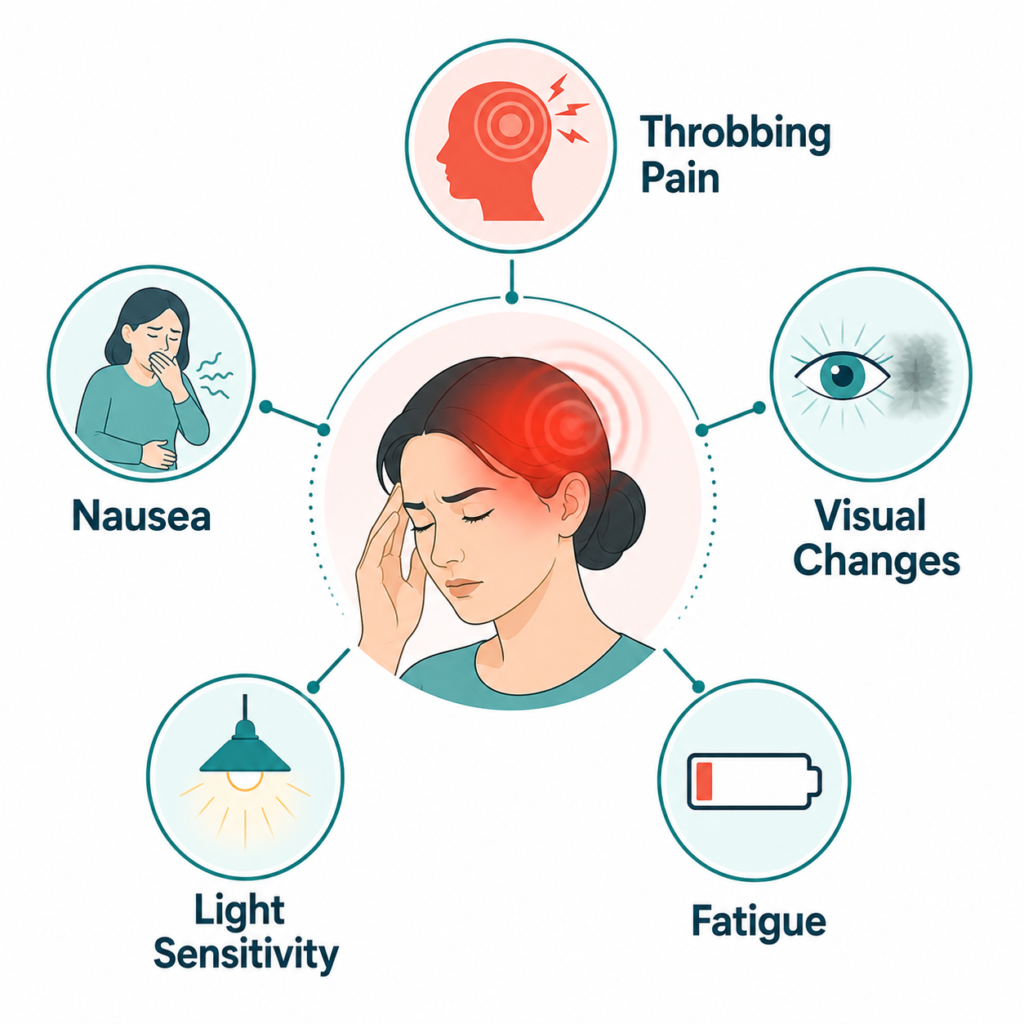
Common symptoms include:
- Throbbing or aching pain on one or both sides of the head
- Pain that worsens with physical activity
- Nausea or vomiting
- Visual changes, including blurred vision or blind spots
- Sensitivity to light, noise, or strong smells
- Fatigue or confusion
- A stiff or tender neck
- Lightheadedness
Some people notice early warning signs, called a premonition, hours or even a day before the headache begins, such as unusual energy, fatigue, food cravings, or mood changes.
Migraine Risk Factors and Triggers
Risk factors include a family history of migraines, being female, and age, since most people experience their first migraine during adolescence, though it can begin at any age.
Common triggers include:
- Dehydration, skipping meals, or certain foods and drinks (including aged cheese, processed meats, alcohol, caffeine, and chocolate, among others)
- Hormonal changes related to menstruation, menopause, or hormonal medication
- Stress, whether emotional, physical, or related to poor sleep
- Bright lights, loud sounds, or strong smells
- Certain medications, which is worth discussing with your doctor if you notice a pattern
- Illness, including common infections like colds or flu
How Migraines Are Diagnosed
While migraines are primarily managed medically, physical tension in the neck and shoulders is a common contributing factor for many patients, and this is where Healthcapes can genuinely help. Our approach typically includes physiotherapy and Manipulation & Mobilization to ease muscular tension that may be aggravating your migraines, along with Deep Tissue Laser Therapy or PEMF Therapy to support relaxation and reduce tension-related triggers. This works best alongside your doctor’s medical management, not as a replacement for it, particularly for diagnosis and medication where needed.
Tips to Help Prevent Migraines
- Eat regularly and avoid skipping meals
- Keep a consistent sleep schedule
- Exercise regularly, since this can help reduce tension and manage weight, both linked to migraine frequency
Frequently Asked Questions
Yes, particularly when neck and shoulder tension contribute to your migraines. Physiotherapy and related therapies can help reduce this physical trigger, though they work best alongside your doctor’s overall migraine management.
Classic migraines involve a warning aura, such as visual disturbances, before the head pain begins, while common migraines don’t have this warning sign. A doctor can help confirm which type you experience.
Vision loss in one eye or sudden one-sided weakness should always be evaluated promptly, since these symptoms can resemble other serious conditions.
There’s no outright cure, but identifying your personal triggers and combining medical management with supportive treatments can significantly reduce frequency and severity.
