

Degenerative Disc Disease Treatment
Degenerative Disc Disease Treatment in Haldwani
Degenerative Disc Disease Treatment in Haldwani at Healthcapes addresses a condition that, despite its name, isn’t really a disease at all, it’s a natural part of aging. The discs between your vertebrae work like shock absorbers, letting your spine flex and bend comfortably. Over time, these discs gradually wear down and lose some of their cushioning ability, which can lead to pain, weakness, or numbness that sometimes radiates down the arm or leg.
What Causes Disc Degeneration

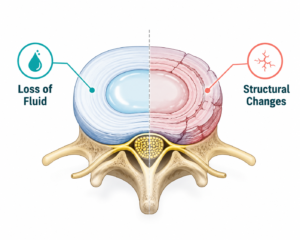
Spinal discs are made of a tough outer layer, called the annulus fibrosus, surrounding a soft, gel-like center called the nucleus pulposus. As people age, everyday stress on the spine, along with minor injuries that often go unnoticed, gradually wears these discs down. Two key changes drive this:
- Loss of fluid — discs in a healthy young adult are up to 90% fluid. Over time, this fluid content drops, making the disc thinner and less effective as a cushion.
- Structural changes — tiny tears develop in the disc’s outer layer, sometimes allowing the soft inner material to bulge or rupture through, which can lead to a herniated disc or, in some cases, the disc breaking into fragments.
As the space between vertebrae shrinks, the spine becomes less stable, and the body often responds by forming bone spurs, small bony growths that can press on nearby nerves and contribute to pain.
Symptoms of Degenerative Disc Disease
Symptoms vary quite a bit from person to person, ranging from none at all to pain severe enough to disrupt daily activities. Common patterns include:
- Pain and weakness in the back that radiates to another area
- If in the lower back, discomfort spreading to the buttocks and thighs, sometimes with tingling or numbness in the legs or feet
- If in the neck, pain spreading to the shoulder, arm, and hand
- Muscle spasms as the body tries to stabilize the spine
- Pain that worsens with sitting, bending, lifting, or twisting, and often eases with walking or changing position
How We Diagnose Degenerative Disc Disease at Healthcapes
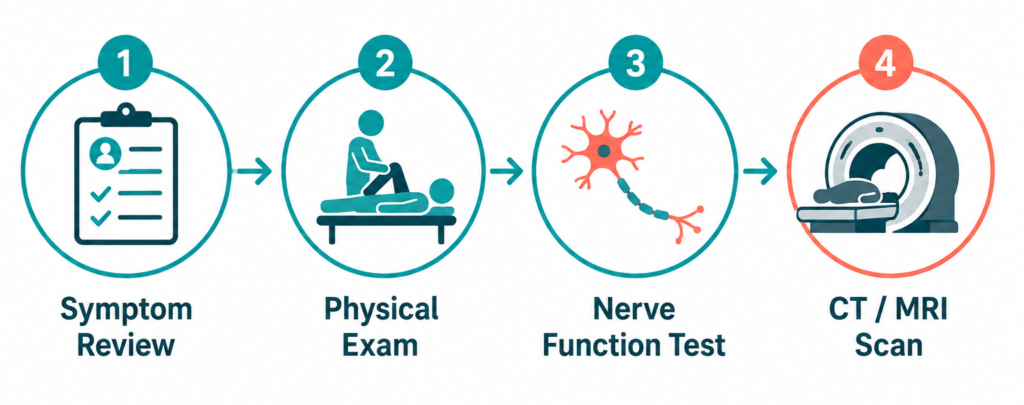
Diagnosis starts with understanding your symptoms, when the pain occurs, and what makes it better or worse, along with any history of falls or injuries. A physical examination checks muscle strength, pain response to movement or pressure, and nerve function. Depending on what we find, we may recommend imaging like a CT or MRI scan to get a clearer picture of the discs and how they’re aligned.
Degenerative Disc Disease Treatment in Haldwani at Healthcapes
While disc degeneration itself can’t be reversed, the right treatment plan makes a real difference in managing pain and maintaining spinal function. At Healthcapes, this typically includes physiotherapy to strengthen the muscles supporting your spine, along with therapies like Deep Tissue Laser Therapy or Manipulation & Mobilization to ease pain and improve movement. We also work with you on practical adjustments, like posture and movement habits, to help slow further wear and manage flare-ups over the long term.
Frequently Asked Questions
Many cases improve within a few weeks with proper care, though this depends on the underlying cause and how early treatment begins.
Not exactly. A slipped disc is one of the most common causes of sciatica, but sciatica itself refers to the nerve pain that results, which can have other causes too.
If you experience loss of bowel or bladder control along with leg pain, seek immediate medical attention, as this can indicate a rare but serious condition.
Yes, in most cases. Physiotherapy and targeted non-surgical treatments are effective for the majority of sciatica cases, with surgery reserved for severe or persistent cases.
